


Getting your laundry room dimensions right makes all the difference. Too cramped, and you’re bumping into appliances. Too much wasted space, and you’ve lost room you could use elsewhere.
I’ll walk you through the exact measurements you need for a laundry room that actually works. We’ll cover standard sizes, appliance requirements, and different layout options.
After helping dozens of homeowners plan their spaces, I know what works and what doesn’t. You’ll learn minimum dimensions, counter sizes, and clearance rules. By the end, you’ll have a clear plan for your own functional laundry area.
What Are the Ideal Laundry Room Dimensions?

The right laundry room size depends on your appliances and how you’ll use the space.
Room size impacts functionality in several ways. A larger room gives you space for folding counters and storage. A smaller room still works if you plan carefully. You need enough clearance to open doors, move around, and access your machines comfortably.
Choosing dimensions based on available space and usage requires honest assessment. Consider how many people live in your home. Think about whether you need sorting space or prefer built-in storage. Match your room size to your actual laundry habits, not an ideal that doesn’t fit your life.
Most functional laundry rooms fall between 35 and 100 square feet. The specific size you need depends on your appliance configuration and storage requirements.
Standard Laundry Room Dimensions

Most laundry rooms range from 35 to 100 square feet, depending on your home size and needs.
Recommended Minimum Laundry Room Size
Ideal dimensions for functional laundry rooms start at 5 feet by 7 feet. This gives you 35 square feet to work with.
At this minimum size, you can fit:
- Side-by-side washer and dryer
- Small counter or folding surface
- Basic shelving above appliances
- Enough clearance to open doors
Laundry Room Size Variations
Small homes and apartments often feature compact laundry spaces. A closet-style setup can work in just 3 feet by 6 feet. This requires stackable appliances and minimal storage.
Many apartments dedicate 4 feet by 6 feet for laundry. You’ll need vertical storage solutions and careful planning. Every inch counts in these smaller configurations.
Medium and large homes typically allocate 6 feet by 9 feet to 8 feet by 10 feet.
These spaces accommodate:
- Counter space for folding
- Full-height cabinets
- Sink installation
- Storage for supplies
- Ironing board
Laundry Appliance Space Requirements
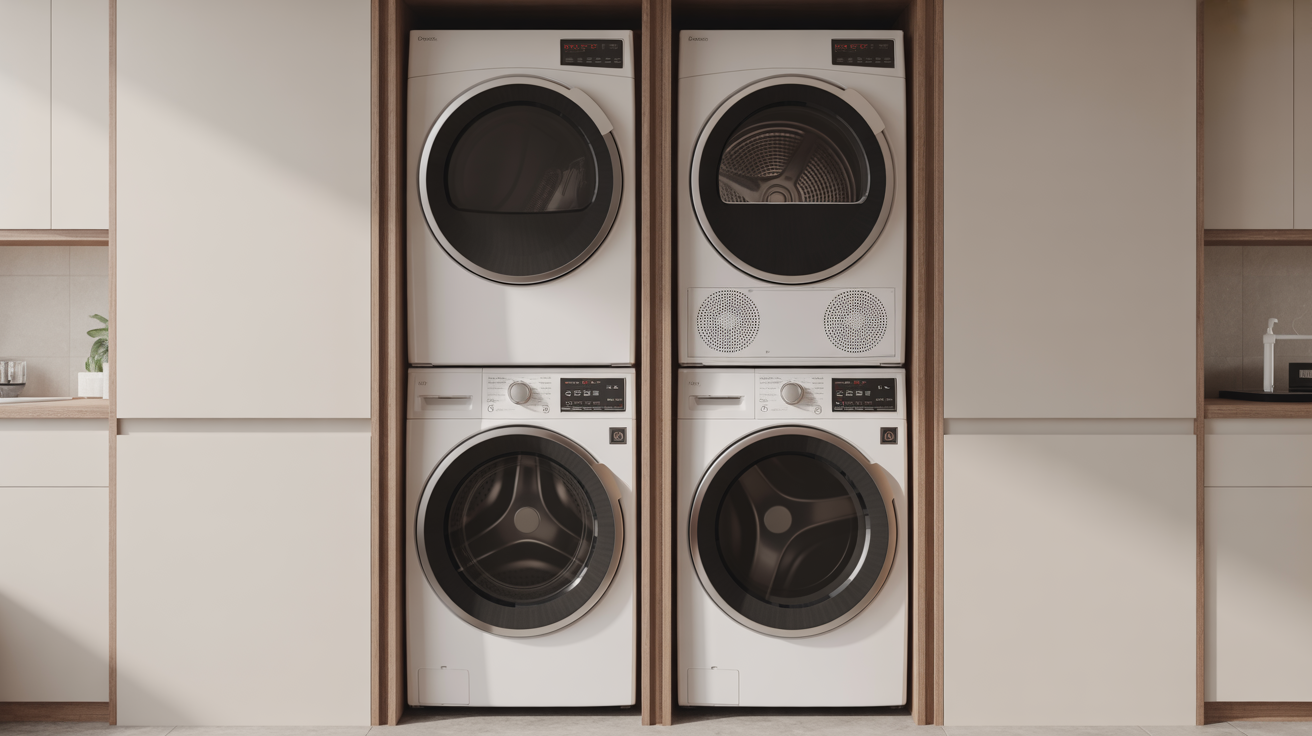
Your appliances need specific width, depth, and clearance measurements to function properly and stay accessible.
Side-by-Side Washer and Dryer Dimensions
Width, depth, and clearance needs for standard machines require careful measurement.
A typical washer measures 27 inches wide. Dryers match at 27 inches. Together, they need 54 inches of wall space at a minimum.
Add 1 to 2 inches between units for easier installation. This brings your total width to 55 or 56 inches.
Stackable Washer and Dryer Dimensions
Vertical clearance and compact layouts work well in tight spaces.
Stackable units measure 27 inches wide by 30 to 34 inches deep. The combined height reaches 70 to 76 inches when stacked.
You need:
- 78 to 80 inches of vertical clearance minimum
- Extra height for opening the dryer door
- Space to reach controls on the top unit
Appliance Clearance Guidelines
Front, side, and rear spacing keep your machines accessible and functional.
Front clearance: 48 inches minimum. This lets you fully open the washer and dryer doors. It also gives you standing room while loading.
Side clearance: 1 inch minimum on each side. More is better for air circulation. If a wall sits on one side, leave 6 inches for accessing connections.
Laundry Room Layout Options
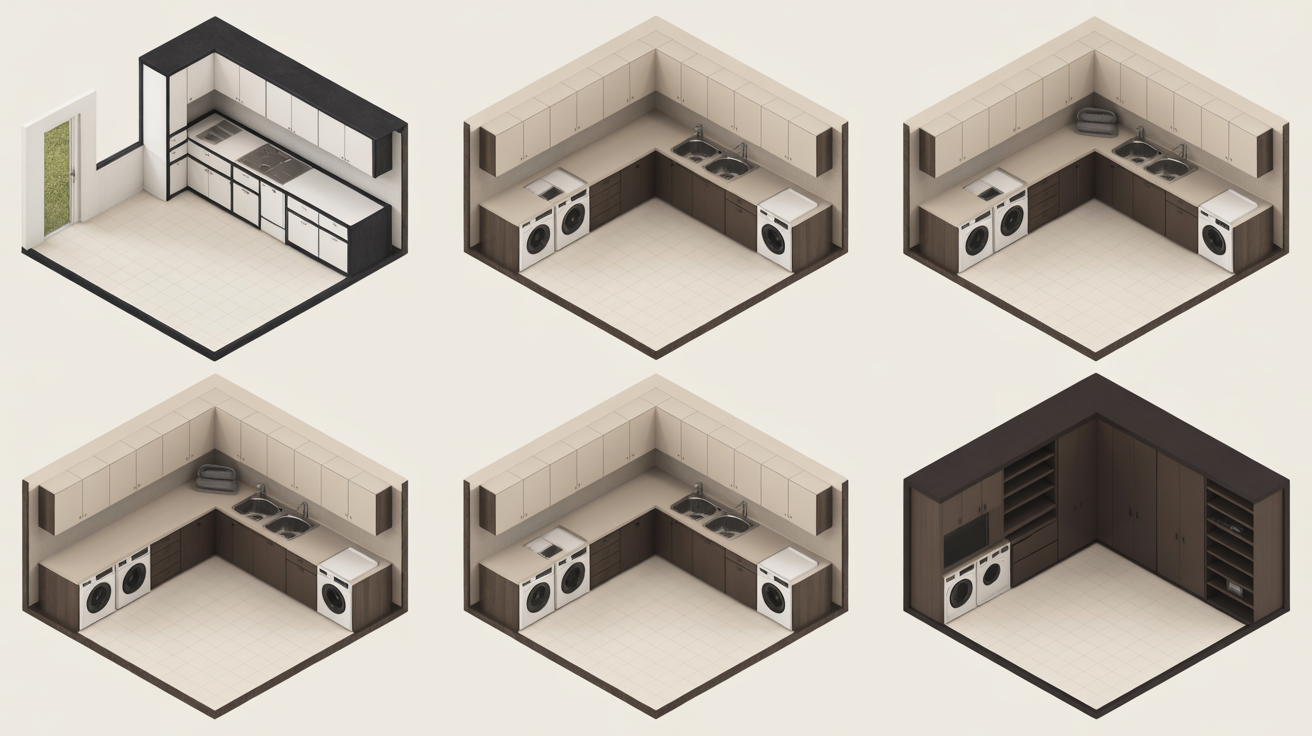
Different layout styles work for different spaces, from single-wall designs to full U-shaped configurations.
Single-Wall Laundry Room Layout
Ideal dimensions for single-wall layouts start at 5 feet wide by 7 feet deep.
Everything sits along one wall. Your washer, dryer, and storage all line up. This works well in narrow spaces.
Best use cases include:
- Hallway laundry areas
- Converted closets
- Bonus rooms with limited wall space
- Basement corners
The layout requires at least 7 feet of length. You can fit appliances and a small counter. Add shelving above for detergent storage.
This configuration works best when you don’t need extensive counter space. It keeps everything within easy reach.
Galley Laundry Room Layout
Two-wall configuration spacing needs 5 to 6 feet between opposite walls.
Appliances sit on one side. Counters and storage occupy the other. This creates an efficient workspace.
Clearance requirements include:
- 42 inches minimum between walls
- 48 inches for comfortable movement
L-Shaped Laundry Room Layout
Corner utilization and space needs start at 6 feet by 6 feet minimum.
Appliances occupy one wall. Counters or cabinets wrap the adjacent wall. The L-shape creates a dedicated work zone.
This layout needs:
- 5 feet on the appliance wall
- 4 to 6 feet on the perpendicular wall
- Open floor space in the corner for movement
U-Shaped Laundry Room Layout
Larger space requirements demand at least 7 feet by 8 feet.
Three walls of workspace surround you. This offers maximum storage and counter space. Everything stays within easy reach.
Workflow efficiency improves dramatically.
You can set up:
- Appliances on one wall
- Folding counter on the second wall
- Storage and sink on the third wall
Closet-Style Laundry Room Layout
Minimum dimensions for a closet laundry start at 3 feet by 6 feet.
This requires stackable machines. Everything fits in a compact footprint. Doors typically fold or slide to save space.
Apartment-friendly design features include:
- Stackable washer-dryer combo
- Shelf above for detergents
- Pull-out hamper below
- Bi-fold or pocket doors
Counter and Storage Dimensions
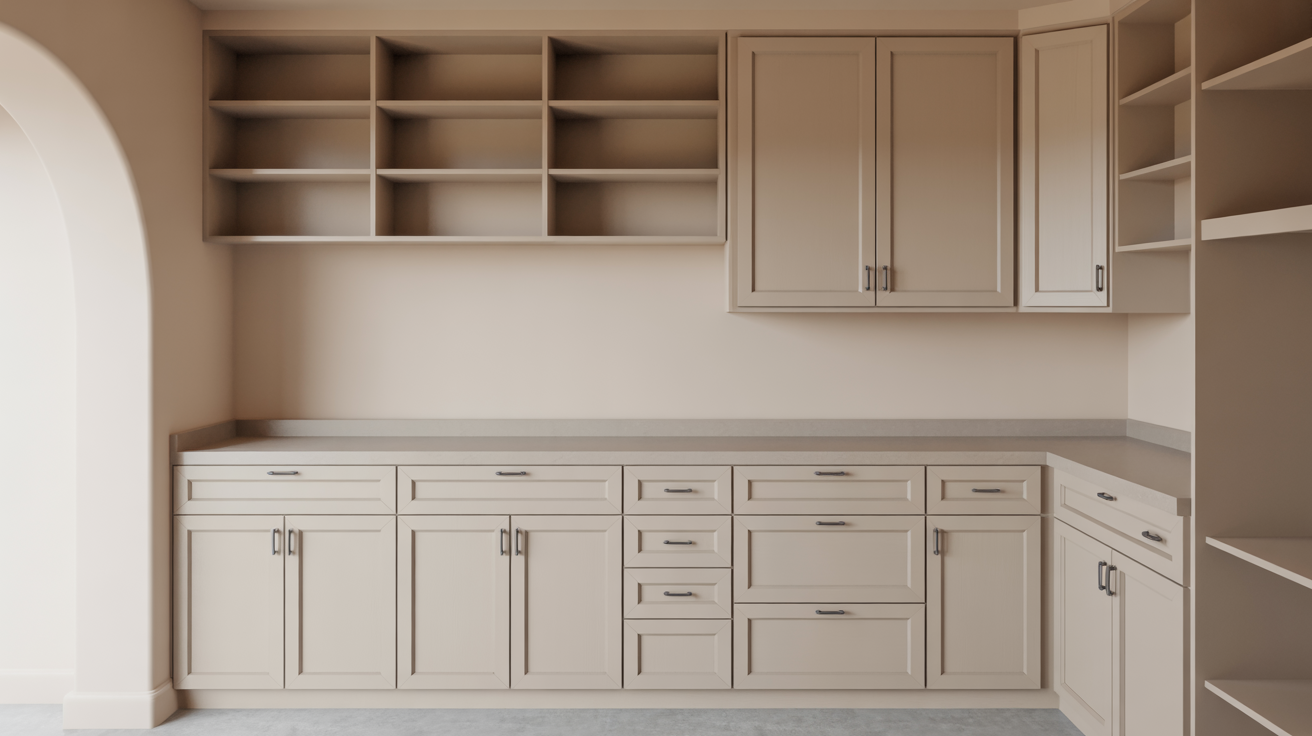
Counters and cabinets follow standard measurements that balance workspace with storage needs.
Counter Space Requirements
Folding and sorting dimensions impact how efficiently you work.
A minimum folding counter measures 24 inches deep by 36 inches wide. This accommodates most clothing items. Larger families benefit from 48 to 60 inches of width.
Standard counter height sits at 36 inches. This matches kitchen counters and feels comfortable for most tasks.
Cabinet and Shelving Sizes
Base and upper cabinet standards follow typical kitchen dimensions.
Base cabinets measure:
- 24 inches deep
- 34.5 inches tall (36 inches with countertop)
- 12 to 36 inches wide, depending on needs
Upper cabinets measure:
- 12 inches deep
- 30 to 42 inches tall
- 12 to 36 inches wide
Install upper cabinets 18 inches above counters. This gives you working space below. Leave 12 to 15 inches between the counter and the bottom of wall cabinets for small appliances.
Tips for Planning Efficient Laundry Room Dimensions
Smart planning now saves you headaches later.
- Measure appliance dimensions before finalizing layout: Check manufacturer specs and note door swing. Add measurements to your floor plan first.
- Maintain proper clearance for doors and ventilation: Leave 30 to 36 inches in front of machines. Dryers need rear venting space.
- Use vertical storage to save floor space: Install wall-mounted shelves and tall cabinets. Hooks keep brooms and supplies accessible.
- Choose layouts that support natural workflow: Position folding space near the dryer. Keep storage within arm’s reach.
- Plan for future appliance upgrades: Leave extra inches in your layout. Machines change size over their 10 to 15 year lifespan.
Conclusion
Planning your laundry room dimensions doesn’t have to feel overwhelming. Measure your appliances, pick a layout that fits your space, and allow proper clearance.
I still remember squeezing past my old washer every single time I needed detergent. Once I redesigned with proper measurements, laundry became so much easier. You deserve that same relief.
Start by measuring your current appliances or the models you want. Draw a simple floor plan with clearances marked. Leave a comment below if you have questions about your specific space. I’m here to help you create a laundry room that actually works.
Frequently Asked Questions
What is the smallest functional laundry room size?
The minimum is 3 feet by 6 feet with stackable units. Side-by-side machines need at least 5 feet by 7 feet.
How much space do I need in front of my washer and dryer?
You need 48 inches of clearance for doors to open fully. Tight spaces can work with 42 inches.
Can I fit a laundry room in a 5×5 space?
Yes, but only with stackable machines. You’ll have minimal storage and tight clearances.
What is the standard counter depth in a laundry room?
Standard counters measure 24 to 30 inches deep. This matches base cabinets and provides folding space.
How high should I install shelves above my washer and dryer?
Install shelves 12 to 18 inches above machines. Top-loaders need 18 inches minimum for lid clearance.
