


Turn your above-ground pool into a backyard feature with these wrap ideas. Wood, stone, composite, and DIY options for every budget.
Looking to hide those exposed metal walls on your above-ground pool? Above-ground pool wrap ideas can turn your pool from an eyesore into a backyard feature you’ll love showing off.
This article covers everything you need to wrap your pool with style. You’ll learn about different materials like wood, stone, and composite options.
I’ll show you budget-friendly DIY solutions and deck integration ideas. We’ll also cover landscaping touches and safety requirements.
I’ve helped dozens of homeowners tackle this exact project over the years. The right wrap makes your pool look built-in, not temporary. It hides equipment, adds value, and makes your backyard feel complete.
Let’s get your pool looking its best.
What Is an Above-Ground Pool Wrap?
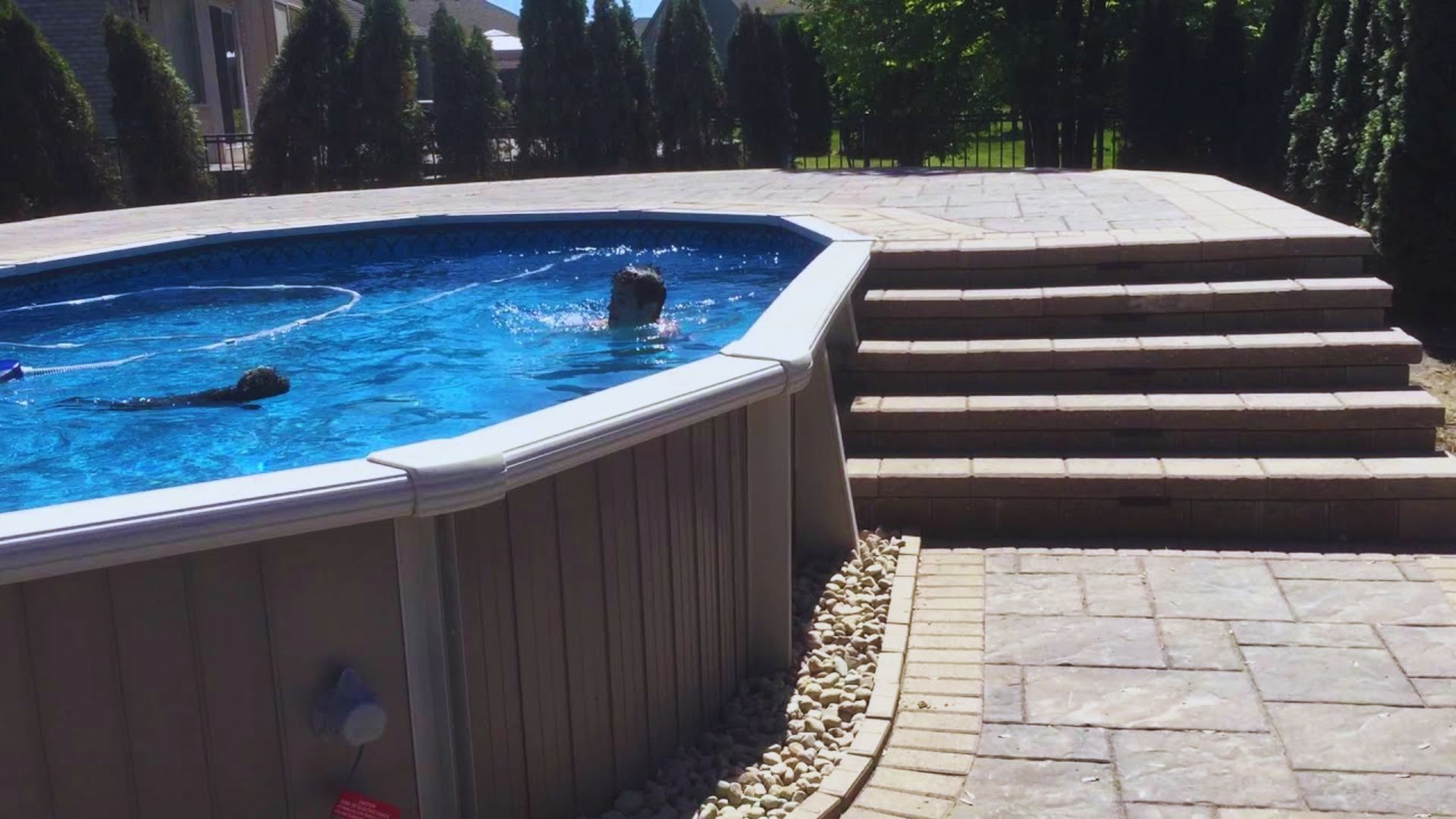
A pool wrap covers the exposed exterior walls of your above-ground pool. It surrounds the pool structure from ground level up to the rim, hiding the metal or plastic walls.
The main purpose is to create a built-in, finished look. Your pool blends with your deck and landscaping instead of looking temporary. Wraps also protect pool walls from weather damage and UV rays.
Common materials include wood, composite, stone, tile, and fabric panels. Each offers different benefits in cost, maintenance, and appearance.
15 Above-Ground Pool Wrap Design Ideas
Choose from wood, composite, stone, or tile to match your backyard style and budget.
1. Cedar Wood Pool Wrap

Cedar naturally resists insects and decay, aging to a silvery gray unless stained.
This classic material brings warmth to any backyard and pairs beautifully with stone patios and garden beds. Cedar costs more upfront but requires less maintenance than other wood options.
2. Pressure-Treated Wood Wrap
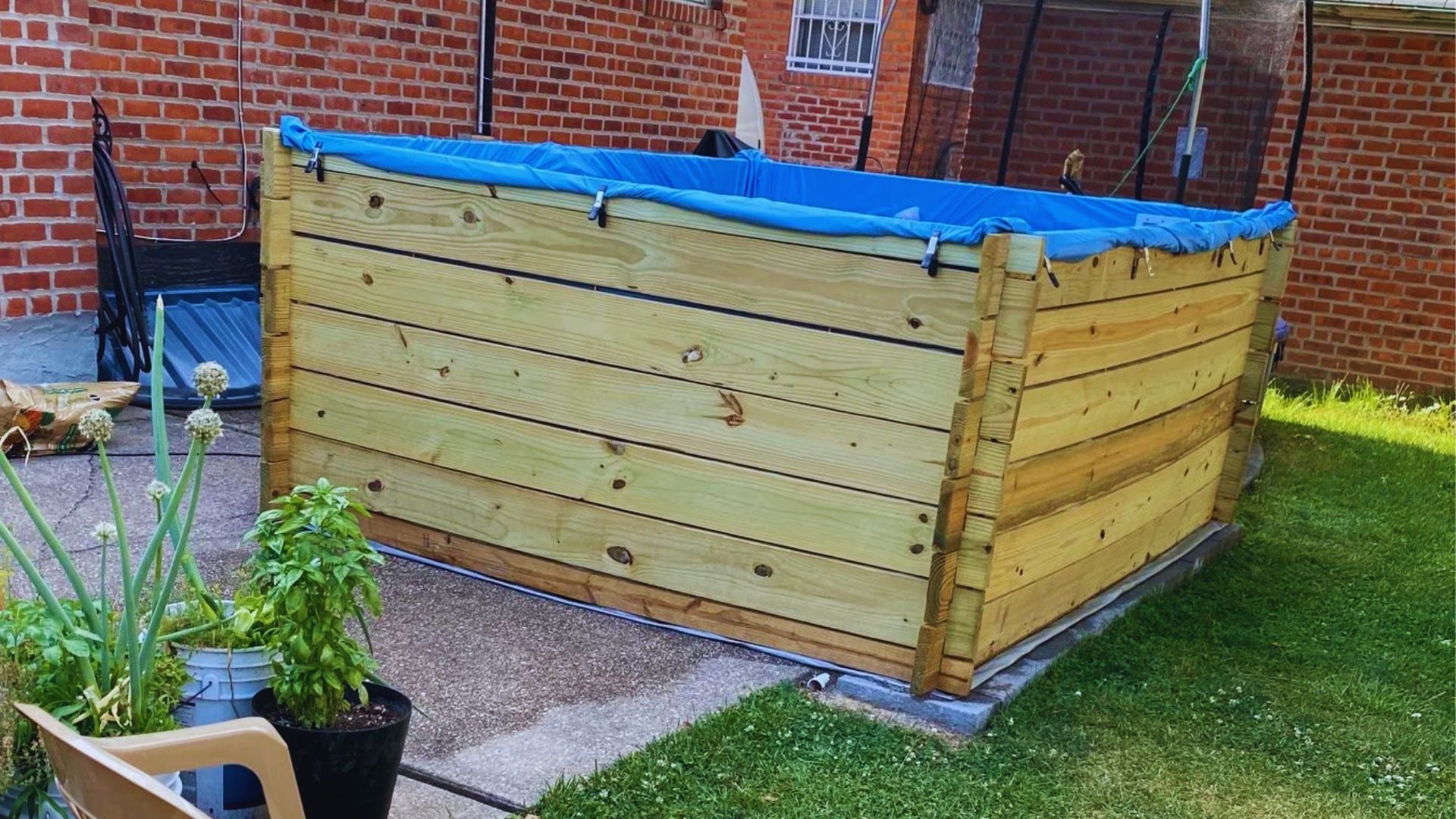
Pressure-treated wood costs about 40% less than cedar but needs sealing every two years. This budget-friendly option works well for tight budgets while still creating a finished look.
Choose quality boards and maintain them properly for 10-15 years of life.
3. Slatted Wood Designs

Horizontal slats feel modern, while vertical slats make pools look taller. Small gaps between boards improve air circulation and prevent moisture buildup.
This design adds visual interest and texture to your pool exterior.
4. Composite Pool Wrap

Composite boards resist fading, staining, and moisture damage without ever needing painting or sealing. A quick wash keeps them looking new.
Most composite comes in wood-grain textures ranging from light tan to deep brown and gray, lasting 25+ years.
5. Real Stone Veneer Wrap
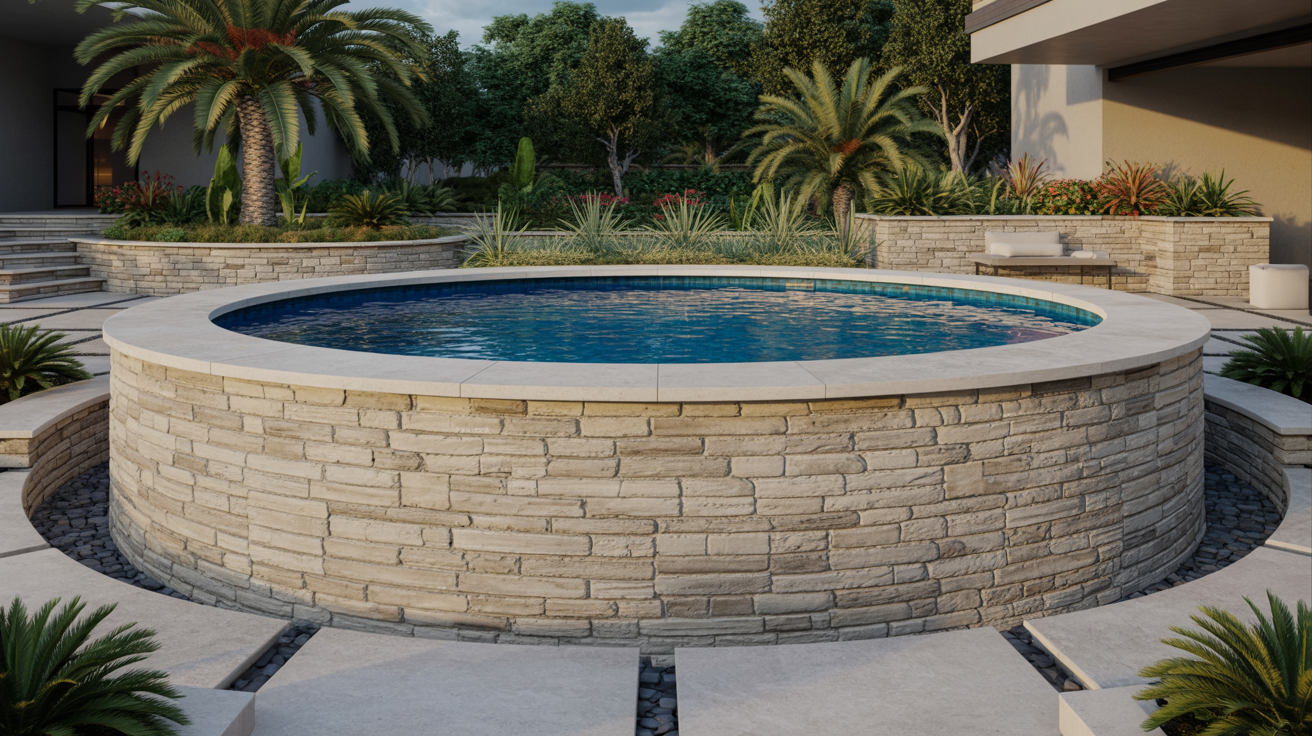
Limestone, slate, and stacked ledgestone create a luxury resort-style look at $15-30 per square foot installed.
Real stone veneer adds substantial value and visual impact. Proper drainage prevents water problems and ensures longevity.
6. Faux Stone Pool Wrap
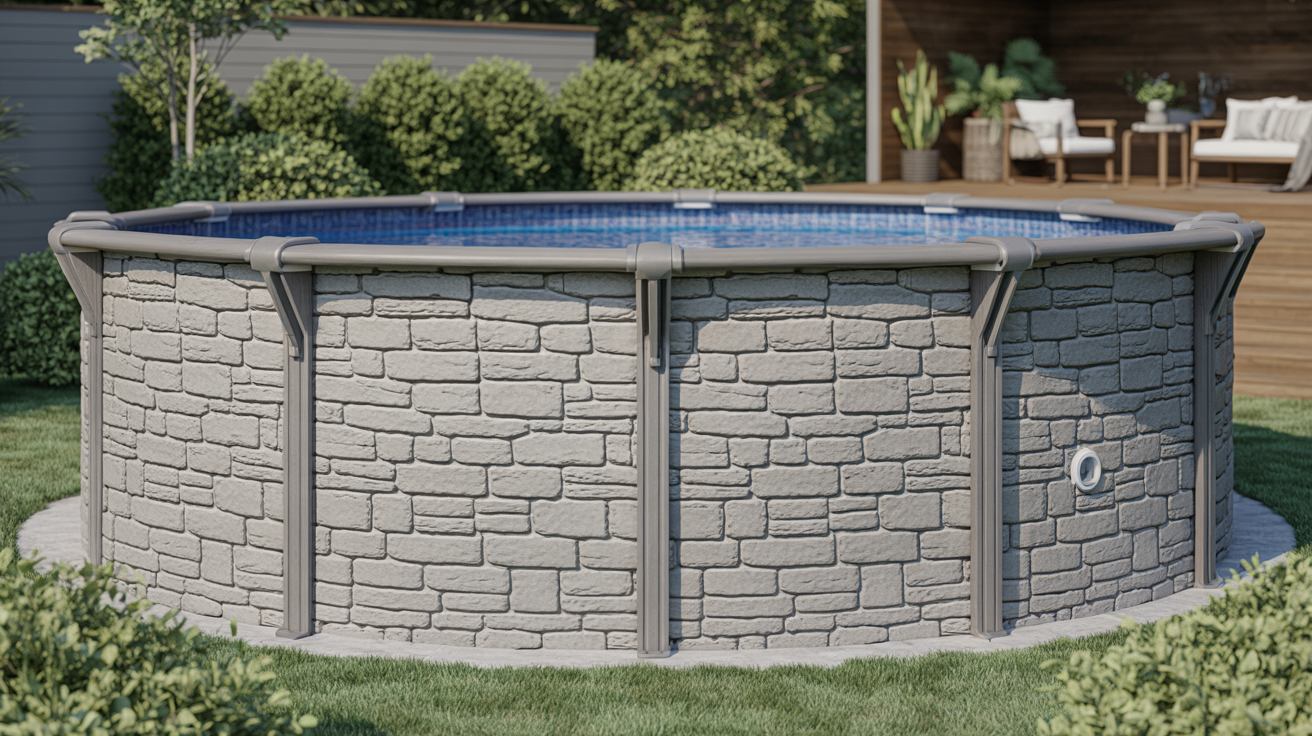
Faux stone options use molded concrete or polymer panels that weigh less and install faster at $8-15 per square foot.
Quality faux stone looks authentic from 10 feet away while being easier to work with than real stone.
7. Ceramic Tile Pool Wrap
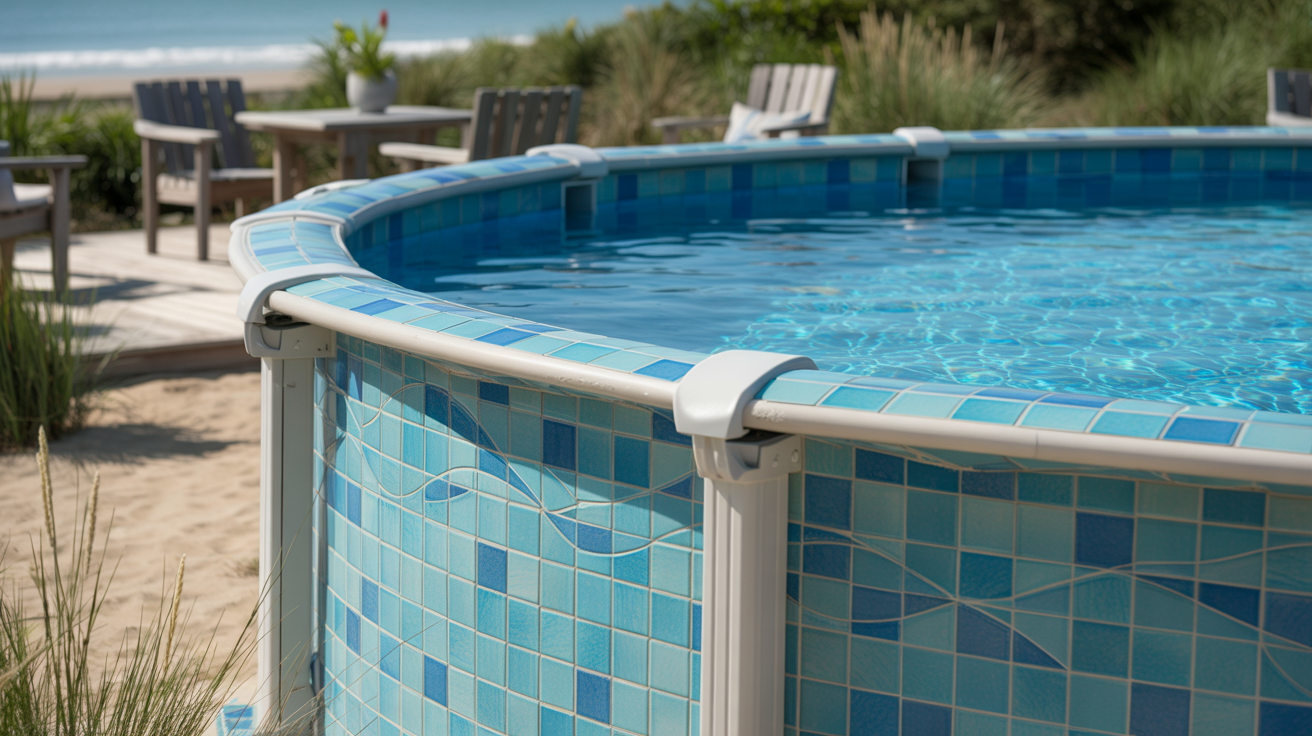
Ceramic tile in blues and greens creates a coastal feel. Mosaic patterns add personality to small spaces.
Tile works best on shorter sections or as accent bands since wrapping an entire pool gets expensive but delivers stunning results.
8. Budget Pallet Wood Wrap
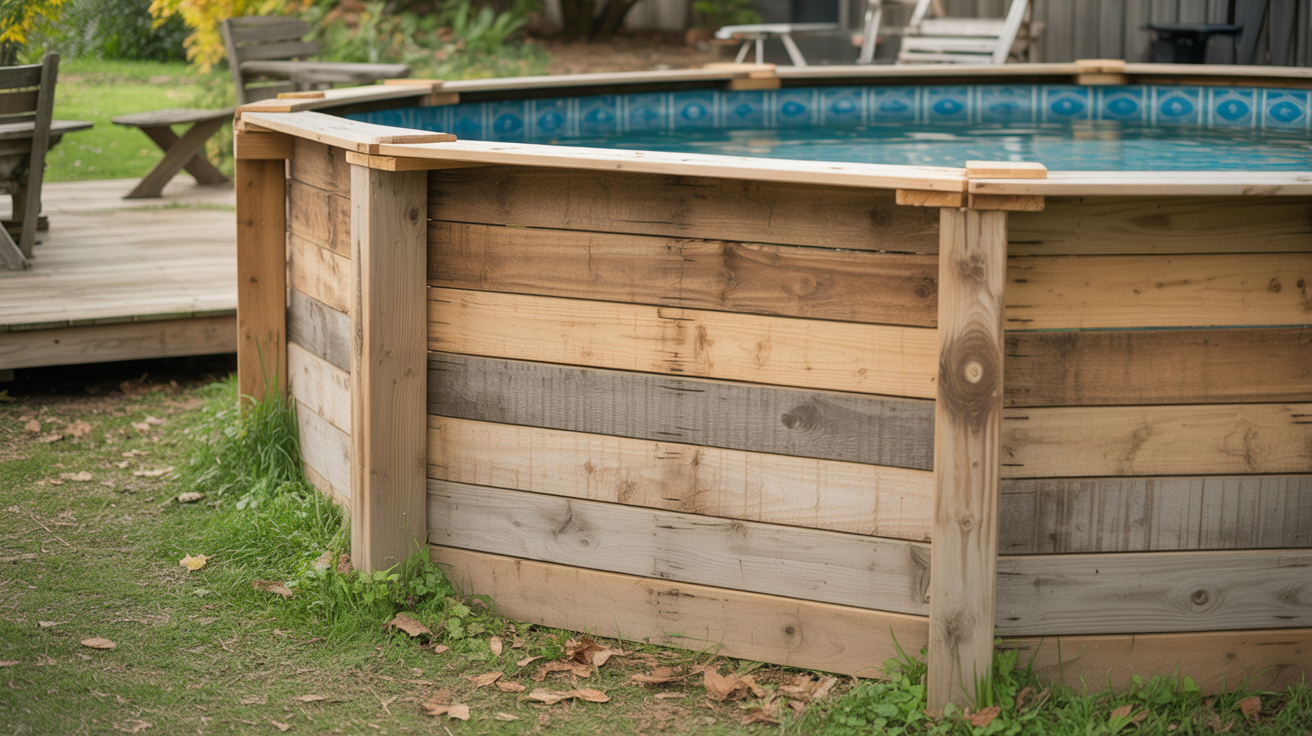
Free or cheap pallets from local businesses work after sanding and sealing, keeping costs under $200 for most pools.
This DIY-friendly option gives you rustic character while saving money. Sand thoroughly and seal properly for weather protection.
9. Lattice Panel Wrap
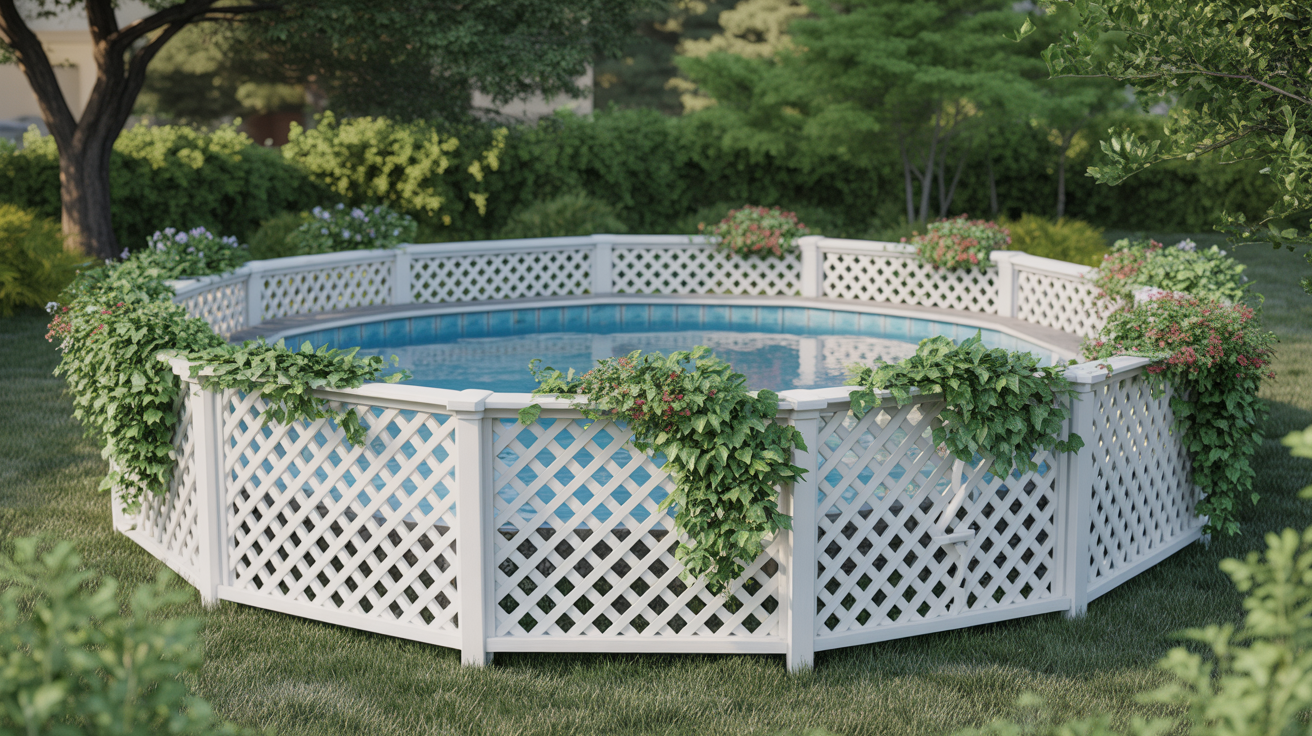
Lattice panels cost $15-25 each and provide privacy while letting air flow through. Add climbing plants like clematis or morning glory for a living wall effect.
This lightweight option installs quickly and looks finished immediately.
10. Outdoor Fabric Wrap
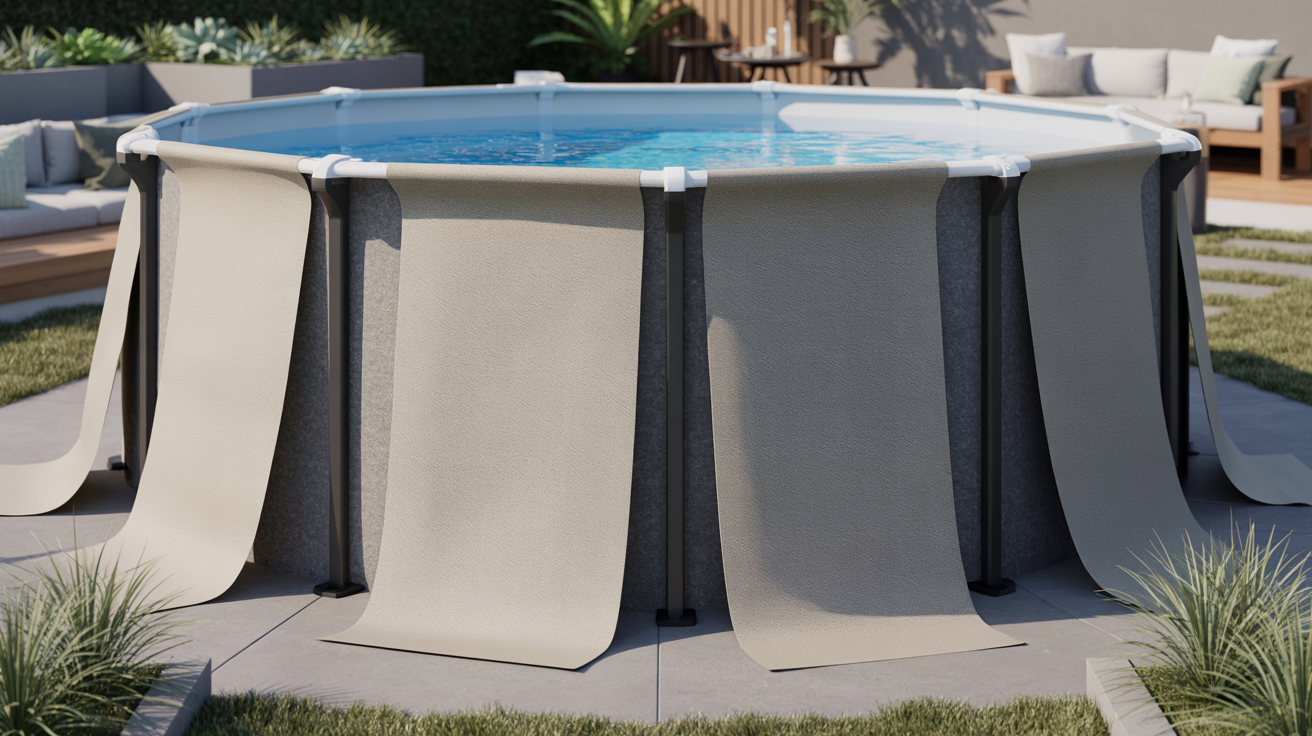
Outdoor fabric stretched over a simple frame takes one weekend to build and looks clean and modern.
Choose weather-resistant canvas or mesh in colors that match your outdoor furniture. This removable option works great for renters.
11. Painted Pool Wall Design
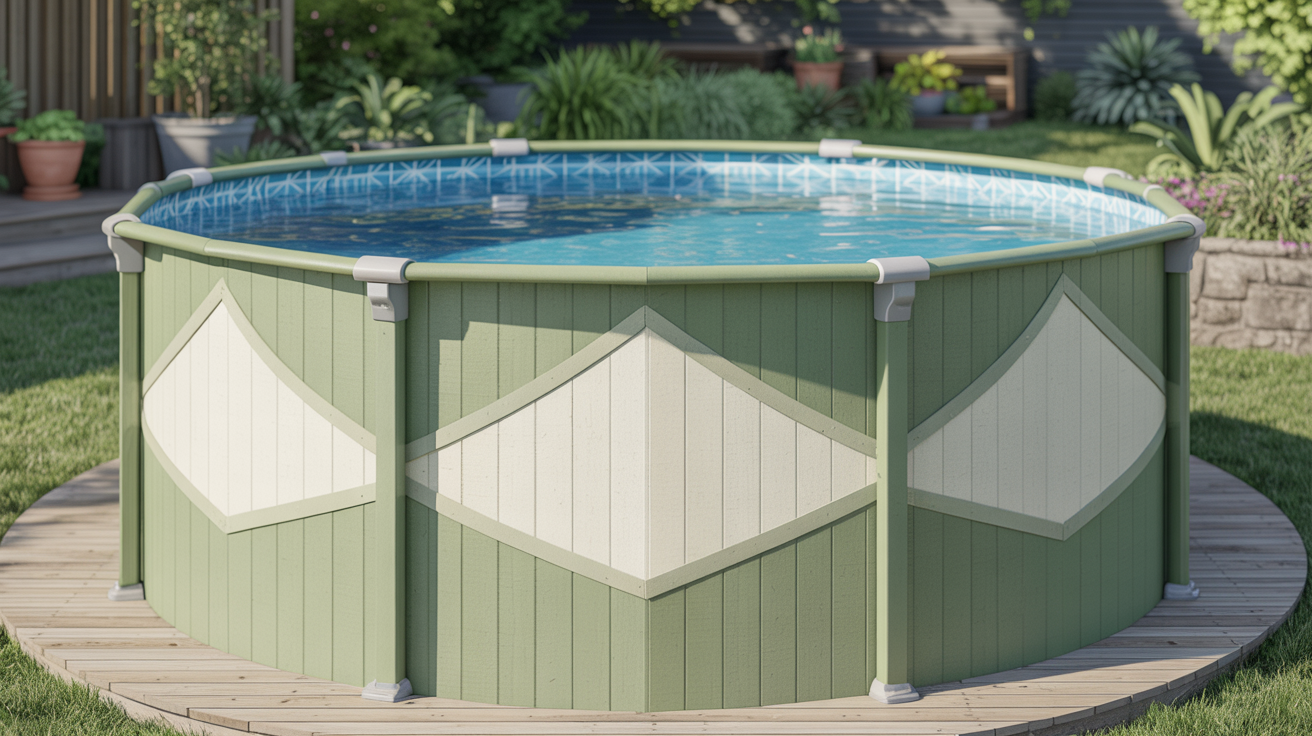
Paint existing pool walls directly with pool-safe exterior paint in light colors that reflect heat. Murals and geometric patterns turn your pool into yard art.
Stripes make round pools look taller while waves match water themes. Outdoor acrylic paint holds up for 3-5 years.
12. Full Wrap With Integrated Deck
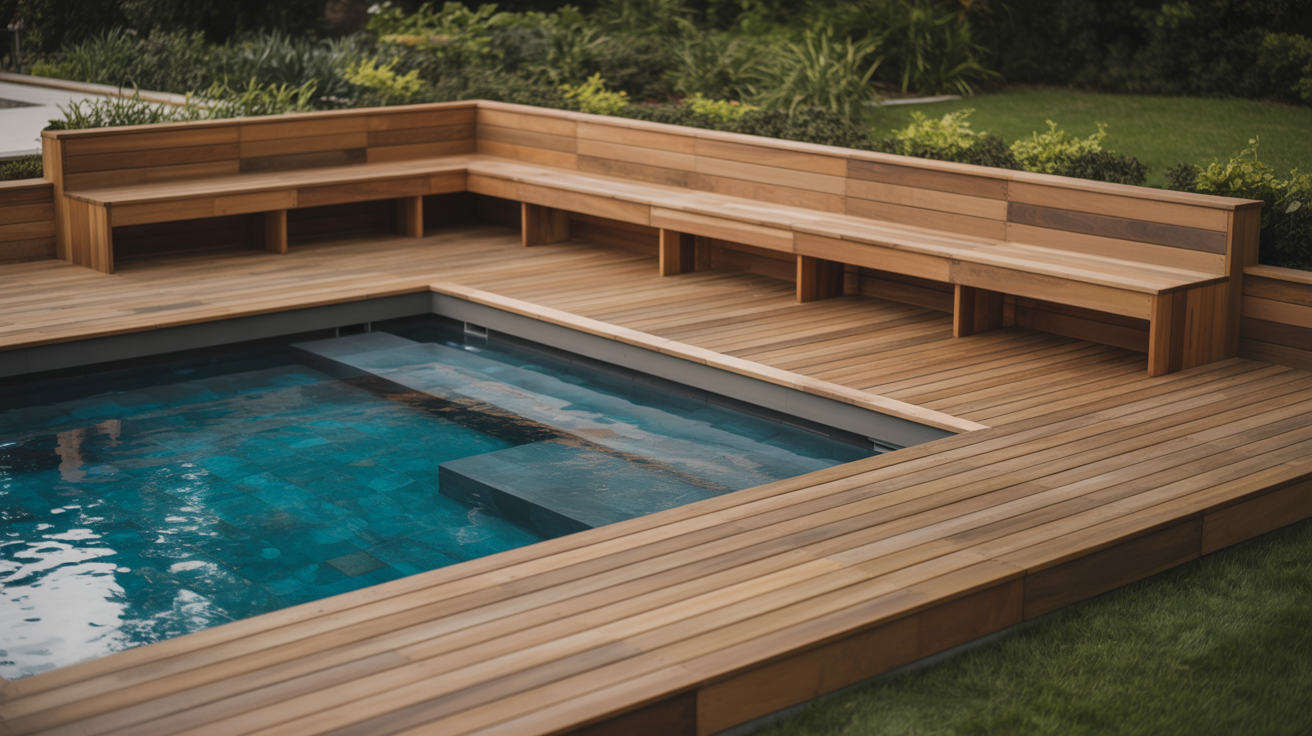
Build your deck at pool height and extend wrap materials down to ground level for one continuous surface.
Use the same wood or composite for both deck and wrap. Match stain colors exactly and add built-in benches where the deck meets the wrap.
13. Partial Wrap for Corner Pools
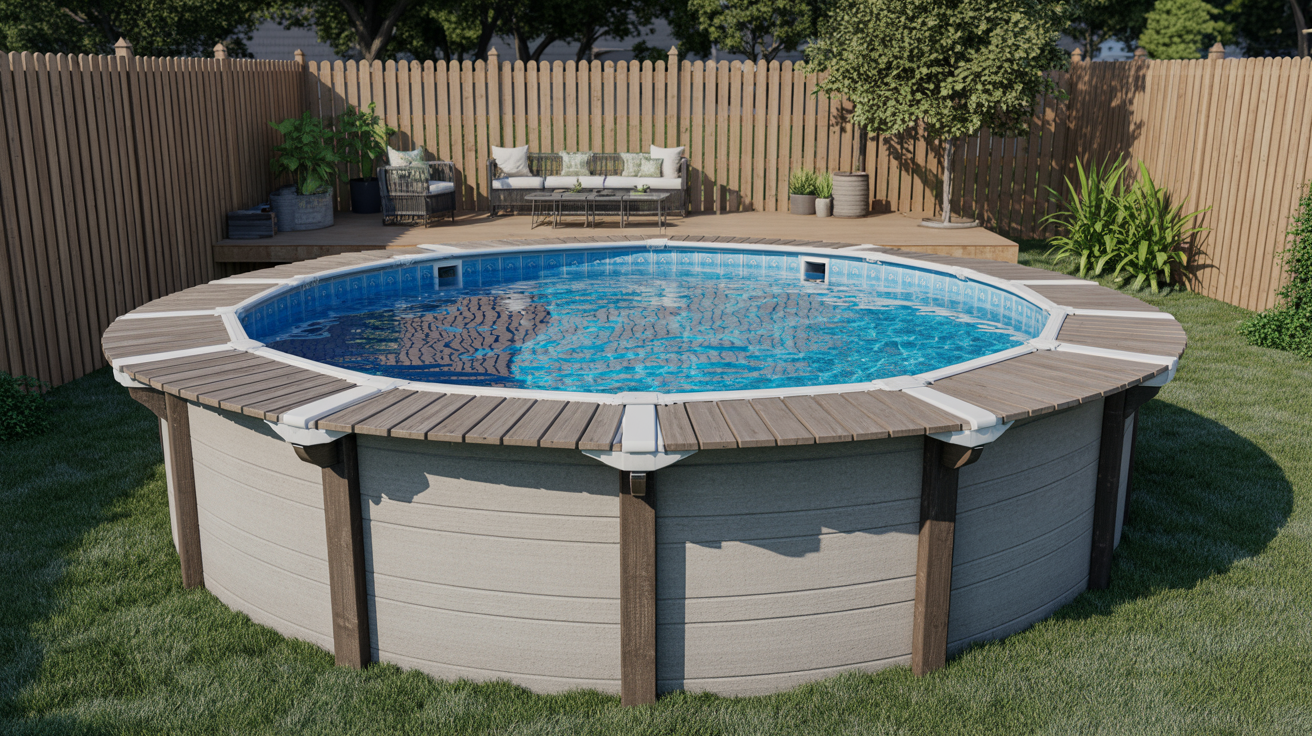
Wrap just the exposed sides if your pool sits against a fence or house, using 30-50% less material. This practical approach saves money while still hiding the most visible sections.
Focus your budget on the sides facing your patio or main viewing areas.
14. Wrap With Built-In Planters
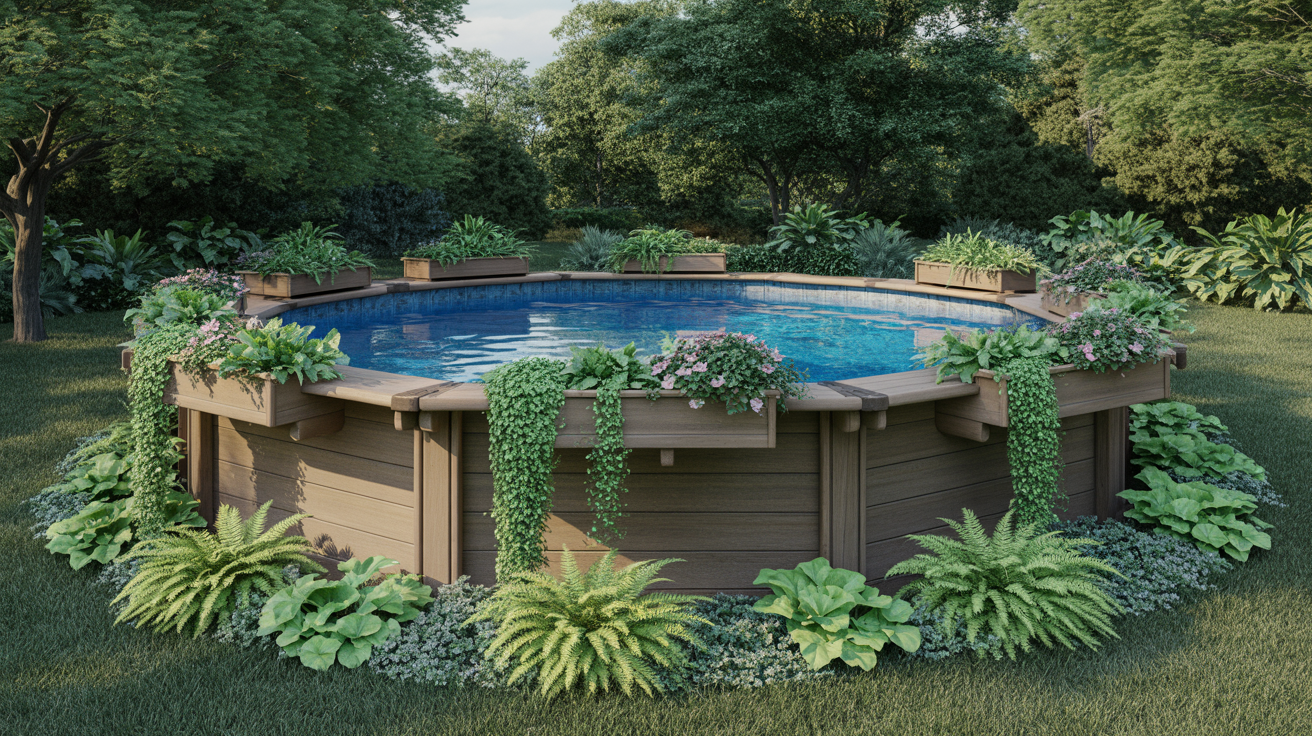
Build planter boxes right into the wrap design at corners where sections meet. Use plants that drape over edges like sweet potato vine or trailing petunias.
Ground-level beds around the pool base hide the wrap’s bottom edge naturally.
15. LED-Lit Pool Wrap
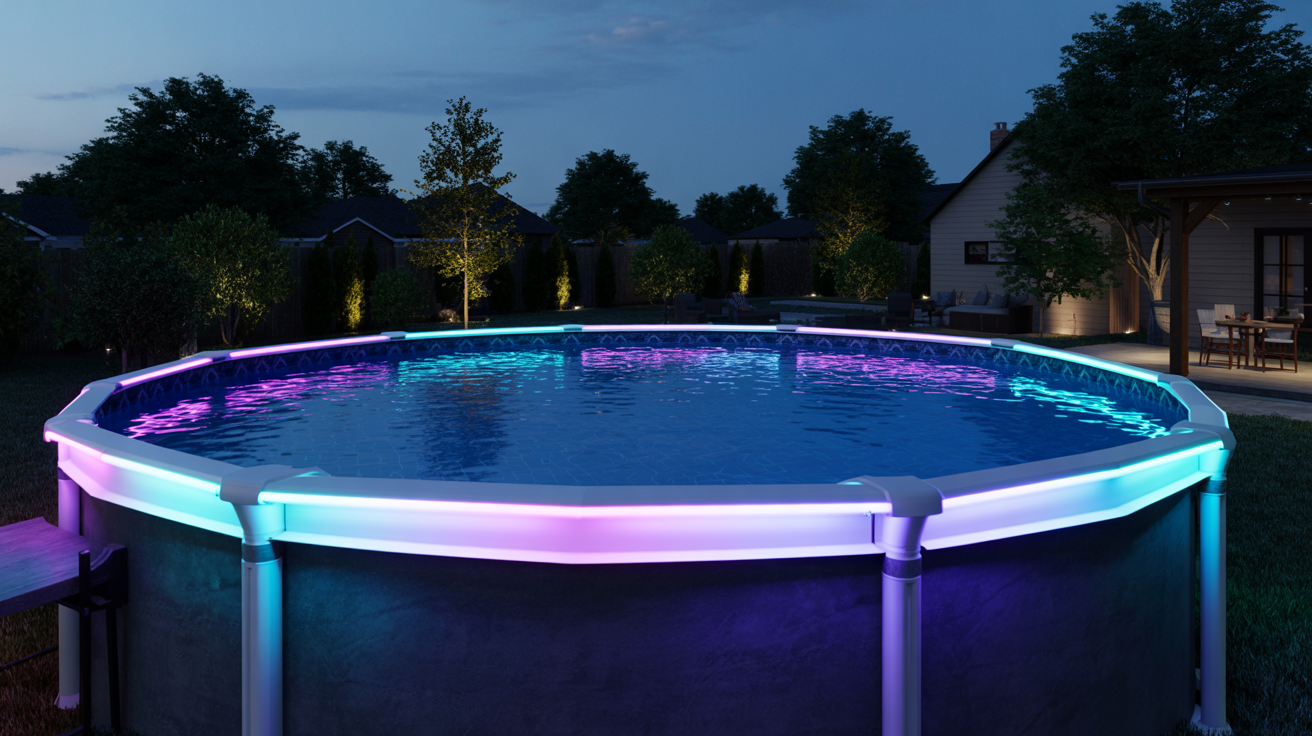
Install LED strips along the top or bottom edge that create a glow and change colors via remote control.
Waterproof LED lighting adds ambiance for evening swimming. Solar versions need no electrical work and can be installed in minutes.
Common Design Mistakes to Avoid
Watch out for these typical errors when wrapping your above-ground pool.
- Blocking all airflow: Pools need ventilation to prevent rust and moisture damage. Leave gaps at the bottom or between boards for air circulation.
- Forgetting equipment access: Build removable panels where pumps, filters, and heaters sit. You’ll need regular access for maintenance and repairs.
- Using the wrong materials: Not all materials handle constant moisture exposure. Choose rot-resistant wood, composite, or properly sealed options for longevity.
- Ignoring local codes: Check permit requirements before building. Some areas require permits for structures over 30 inches tall or within certain distances of property lines.
- Skipping proper drainage: Water must drain away from the wrap and pool base. Poor drainage causes wood rot, stone damage, and foundation problems.
Conclusion
Your above-ground pool doesn’t have to look temporary anymore. I’ve seen simple wraps completely change how people use and enjoy their backyards.
Start with one side if the budget’s tight. Add more sections as you can. Even partial wraps make a noticeable difference.
The best part? Most of these ideas take just a weekend to complete. Pick the style that fits your space and skills. Your pool will finally feel like it belongs.
Drop a comment below with your favorite wrap idea. I’d love to hear what works in your yard.
Frequently Asked Questions
How much does it cost to wrap an above-ground pool?
Basic DIY wraps using pallets or fabric cost $100-300. Wood or composite wraps run $500-2000, depending on pool size. Professional stone or tile installation can reach $3000-5000 for larger pools.
Can I install a pool wrap myself?
Yes, most pool wraps are DIY-friendly. Fabric, lattice, and basic wood wraps need only common tools. Stone and tile wraps require more skill but are still manageable for experienced DIYers.
Do pool wraps require maintenance?
Wood wraps need sealing every 2-3 years. Composite and vinyl just need occasional washing. Stone and tile may need grout touch-ups. Fabric wraps should be removed before winter in cold areas.
Will a wrap damage my pool?
No, if installed correctly. Keep wraps from touching the pool walls directly to allow airflow. Don’t drill into the pool structure. Use freestanding frames or attach to deck posts instead.
How long do above-ground pool wraps last?
Treated wood lasts 10-15 years with proper care. Composite wraps last 20-25 years. Stone and tile can last 30+ years. Fabric wraps typically need replacement every 5-7 years.
