


Your master bedroom closet should work with your daily life, not against it. Many homeowners struggle with cramped spaces, poor flow, and storage that doesn’t match how they actually get dressed. The result? Frustrating mornings and wasted space.
This guide shares seven practical master bedroom closet ideas that fix real layout problems. You’ll learn about door placement, window planning, dual-user zones, and circulation fixes. I’ve worked on dozens of closet designs, and I’ve seen how small changes create big improvements.
These aren’t trends or quick fixes. They’re proven layout strategies that make mornings easier and your space more functional. We’ll cover everything from adding doors for visual balance to using elevations for perfect proportions. Let’s make your closet work the way it should.
Why Master Bedroom Closet Layout Matters More Than Size?
Good layout beats square footage every time. A small closet with smart organization feels better than a large one with poor planning. The secret is in how you arrange storage, not how much space you have.
Circulation is the space you need to move around comfortably. Without it, your closet feels tight. You need clear paths to open drawers, reach shelves, and put on clothes.
Storage balance means having the right mix of hanging rods, shelves, and drawers. Too much of one type leaves you cramped. The right combination lets everything have its place.
Odd shapes and awkward corners can actually become assets. An angled wall might hold a bench. A low ceiling area works well for shoes. The key is working with what you have instead of fighting it.
11 Master Bedroom Closet Layout Ideas
Adds visual order and creates a polished transition between the bedroom and bath.
Add a Door to Create Visual Balance
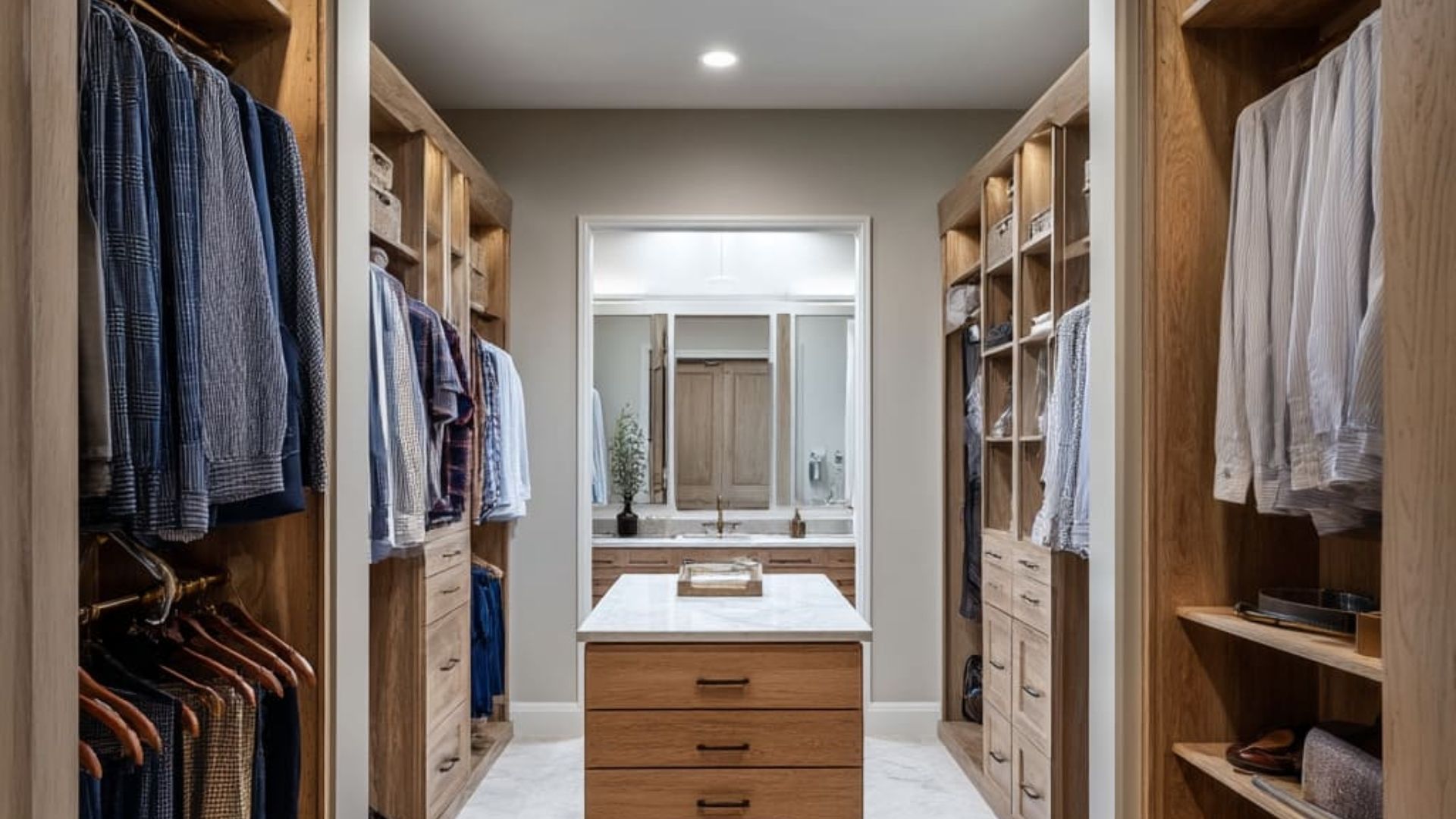
Open pass-throughs between closets and bathrooms feel modern but often create problems. You see everything at once: hanging clothes, bathroom fixtures, and cluttered shelves. Nothing gets a break from being on display.
This constant visibility makes both spaces feel messier than they are. Your eye has nowhere to rest. The closet and bathroom blur together instead of each having its own purpose.
Framing the Closet as a Design Feature

A door doesn’t mean hiding your closet. It means creating intentional moments. When you open the door, you see what you want to see: a well-lit window, a built-in dresser, or organized shelving.
Think of the door as a frame. It directs attention to your best design choices. A glass-panel door still shows light and views while defining separate zones.
Plan Storage Around Windows, Not Against Them
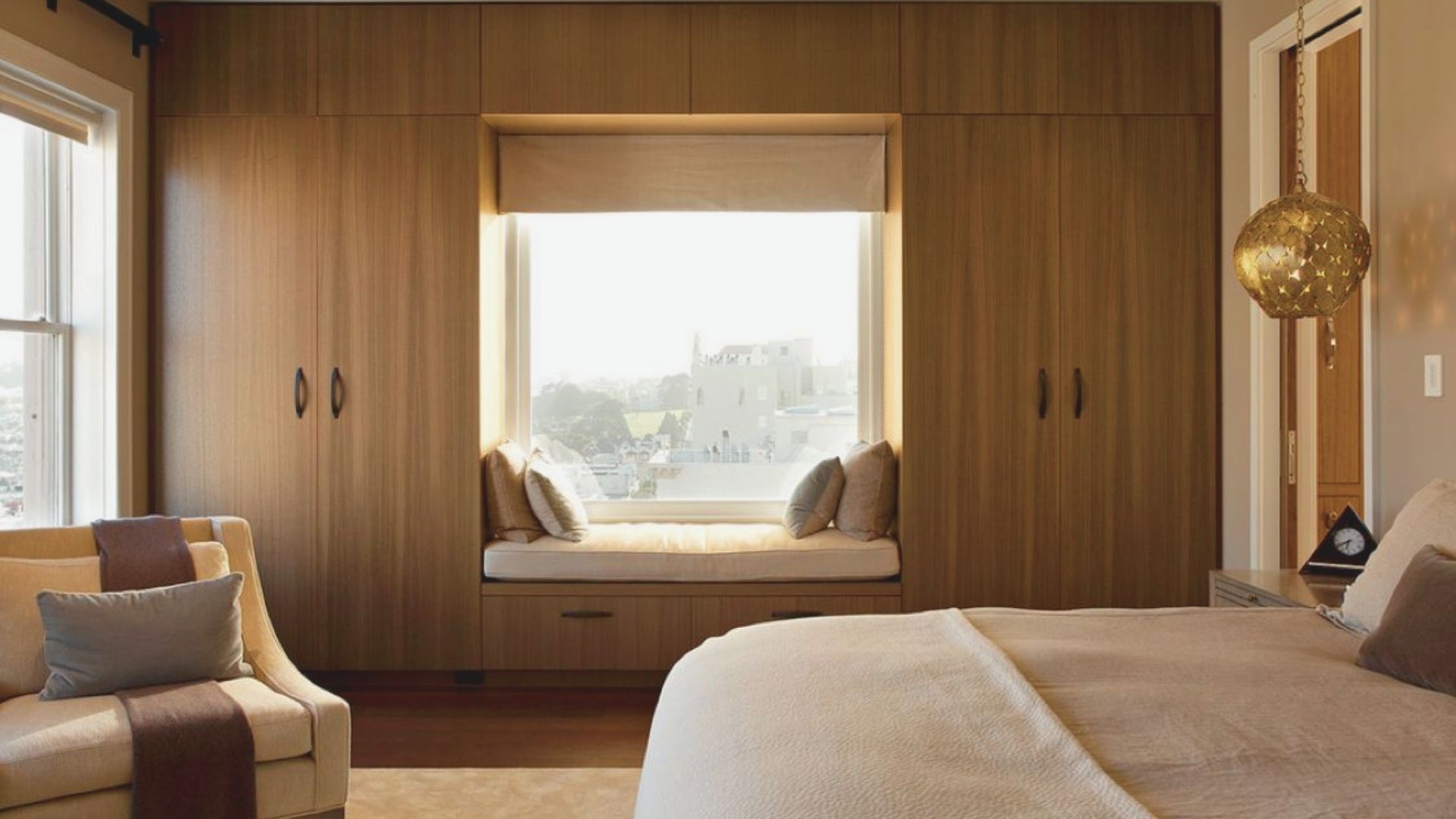
Windows bring life to a closet. They provide daylight for choosing colors and create a connection to the outdoors. Covering them with storage ruins this benefit.
When you build shelves right up to a window, you block light and make the space feel smaller. The window becomes useless, just another section of wall behind hanging clothes.
Smart Window Placement for Maximum Storage
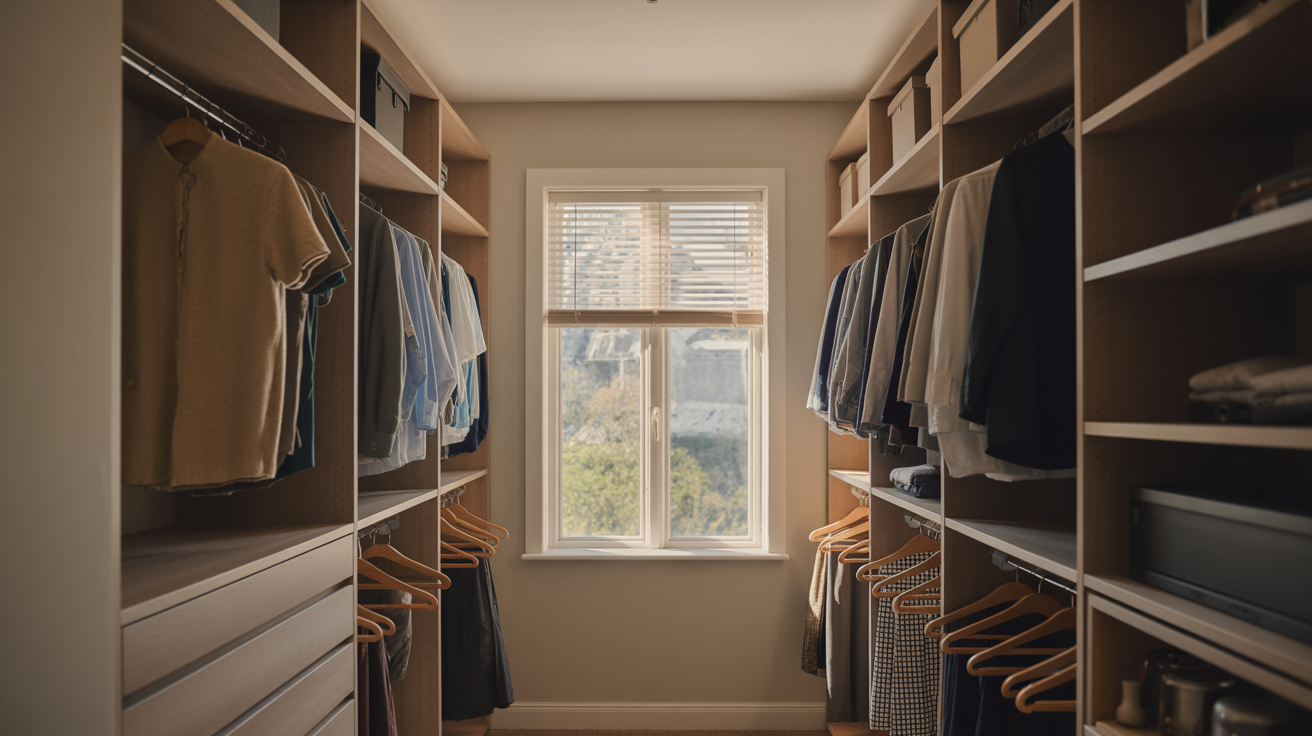
The best closet layouts put windows on walls without critical storage needs. A window on a short wall works better than one on a long wall, where you need continuous hanging space.
Consider window height, too. High windows bring in light without taking away wall space below. You can still install full-height wardrobes or dressers underneath. Plan storage walls opposite or perpendicular to windows.
Use Mixed Storage for a Custom Look
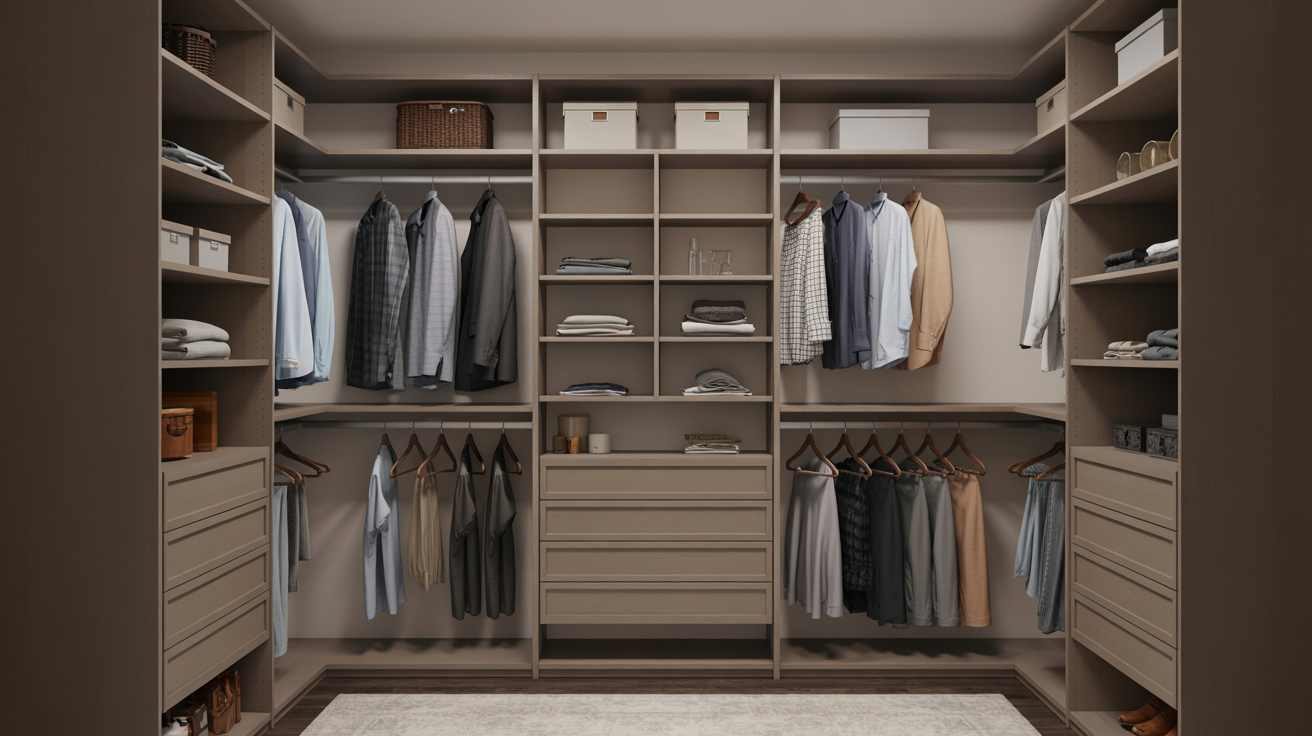
Rods alone waste vertical space. Most hanging clothes only need 40 to 60 inches of height. The area above sits empty. Adding shelves there doubles your storage.
Open shelving between hanging sections creates visual breaks. You can fold sweaters, stack boxes, or display bags. This variety makes the closet feel less like a clothing warehouse.
Mix materials for interest. Wood shelves against white walls. Metal rods with fabric bins. These small contrasts add personality without costing extra.
Designing for Short and Long Garments
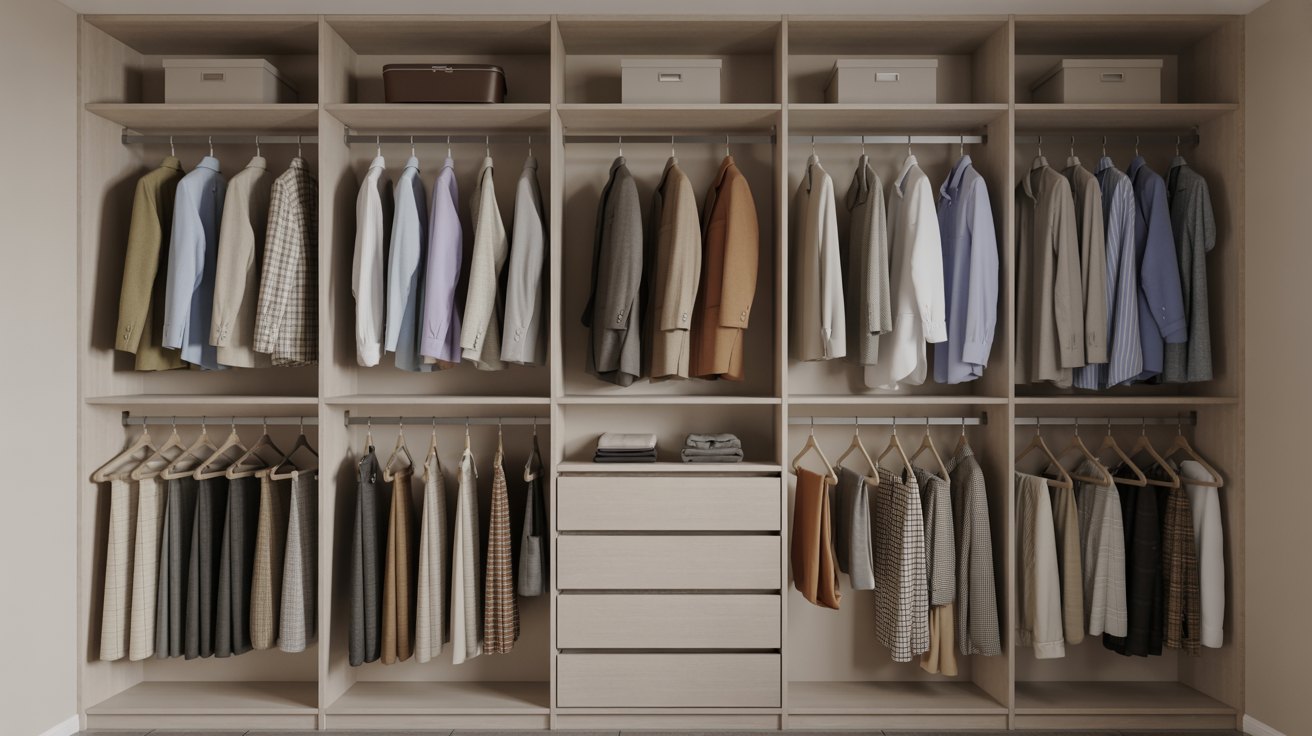
Not all clothes hang the same length. Shirts and folded pants need about 40 inches. Dresses and coats need 60 to 70 inches. Using one rod height for everything wastes space.
Install double rods in areas for shorter items. This stacks shirts over pants and doubles your hanging capacity. Reserve single rods for longer pieces.
This height variation also improves how the closet looks. Different levels create rhythm instead of monotony. Your eye moves around the space instead of seeing one flat plane.
Creating Clear Zones for Each Person
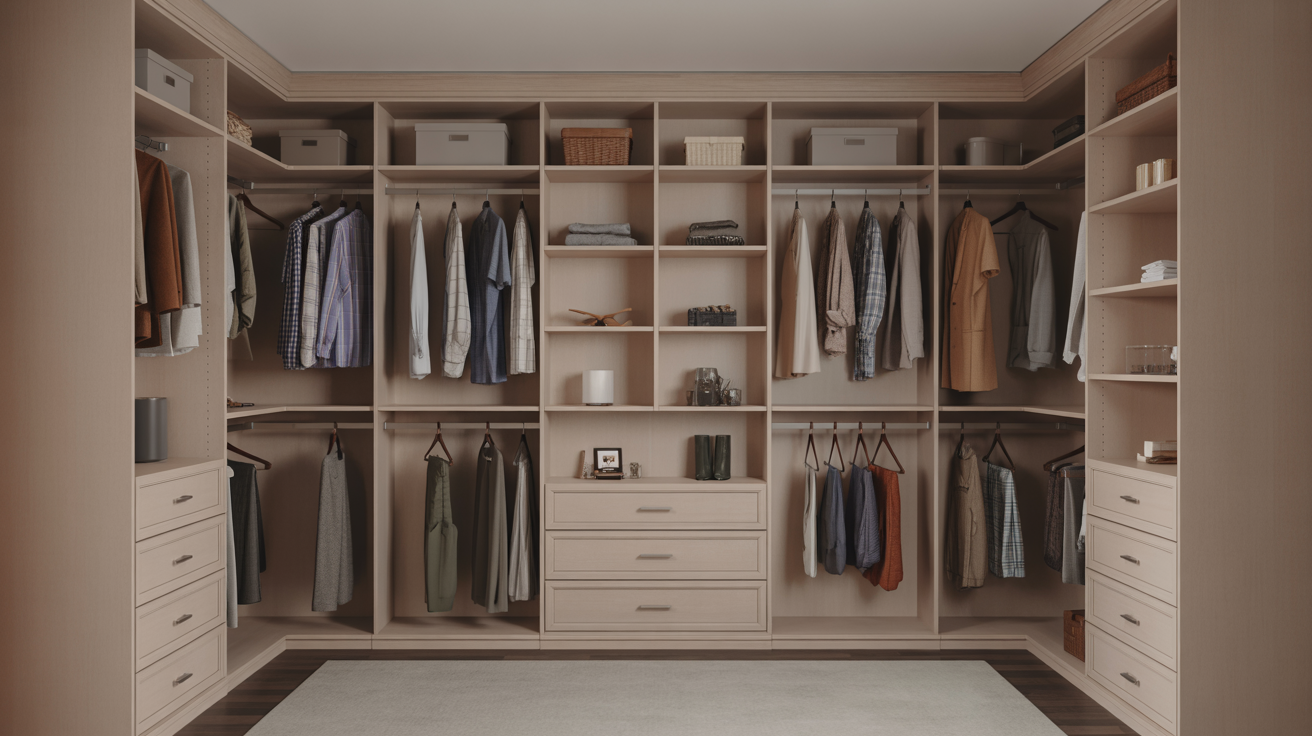
Shared closets fail when territories aren’t clear. Without defined zones, couples argue about space, and storage gets chaotic. Each person needs their own area.
Divide the closet down the middle, or give each person one wall. Make the split obvious through different storage configurations. One side might have more hanging space, the other more shelves.
Label or assign sections early. This prevents the gradual creep of one person’s items into the other’s space. Clear boundaries reduce daily stress.
Circulation Space That Actually Works
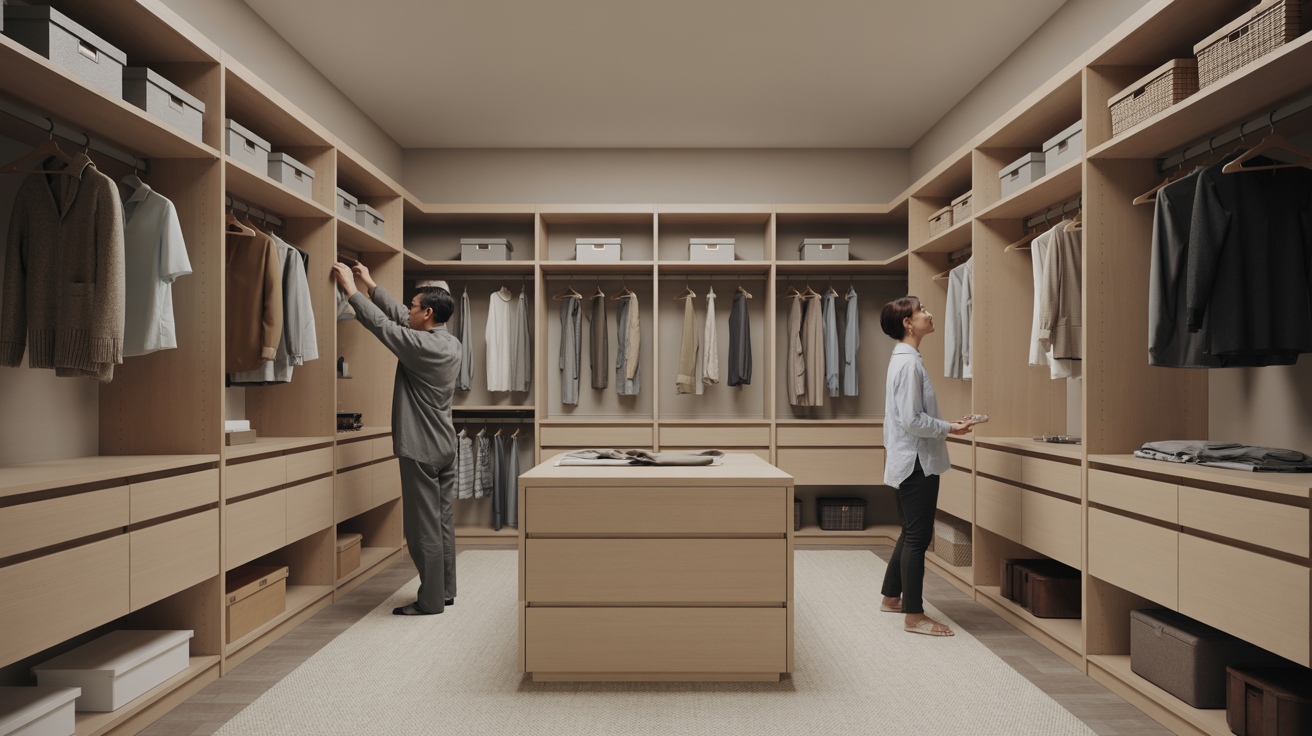
Two people need room to move at the same time. Standard clearance is 36 inches minimum between storage walls. This lets you both access clothes without bumping into each other.
For walk-in closets, 42 to 48 inches feels better. You can fully open drawers, step back to view outfits, and pass by someone else comfortably.
If your closet can’t fit this width, consider an L-shape or separate zones. Each person gets their own area to dress, even if the overall footprint is small.
Avoiding Narrow, Tunnel-Like Layouts
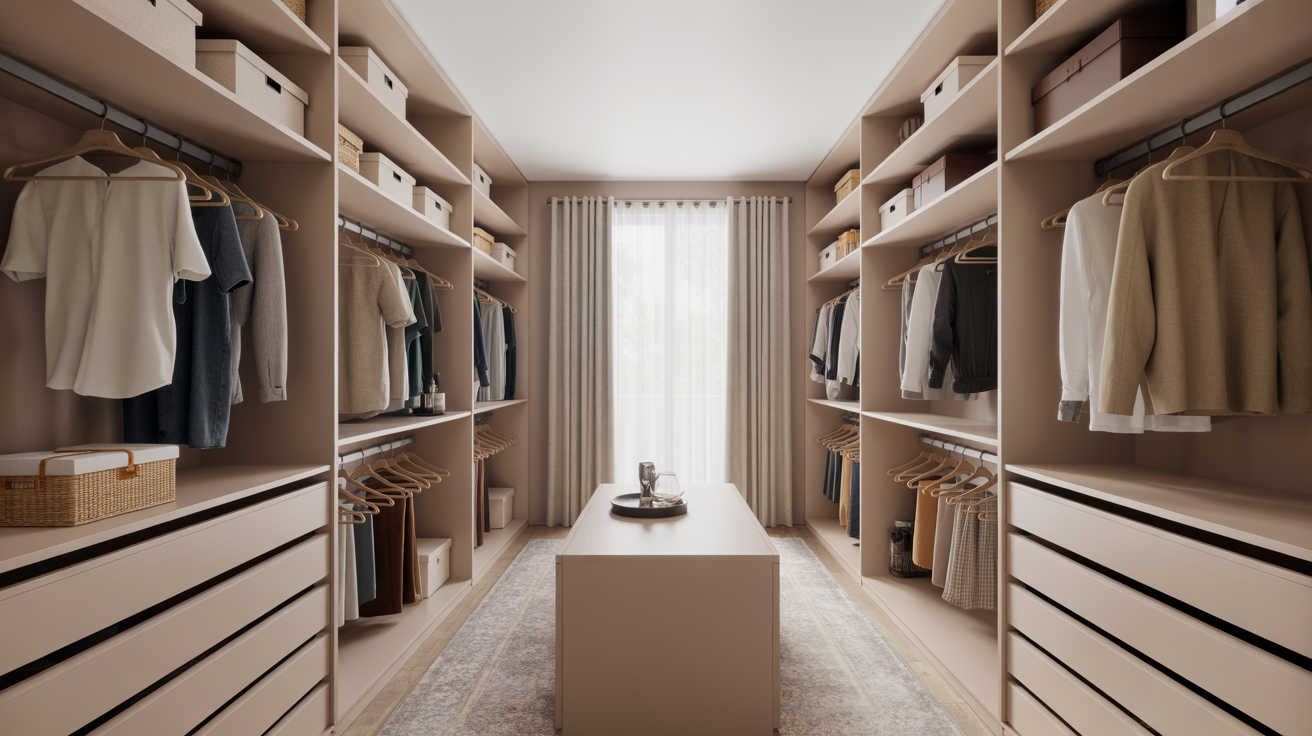
Long, narrow closets feel cramped even when they have decent square footage. Walking through a tight corridor to reach your clothes isn’t pleasant. The space feels like storage, not a room.
This happens when storage depth eats up too much width. Standard wardrobes are 24 inches deep. In a 5-foot-wide closet, that leaves only 12 to 18 inches to walk. It’s tight and uncomfortable.
Layout Adjustments That Instantly Open the Space
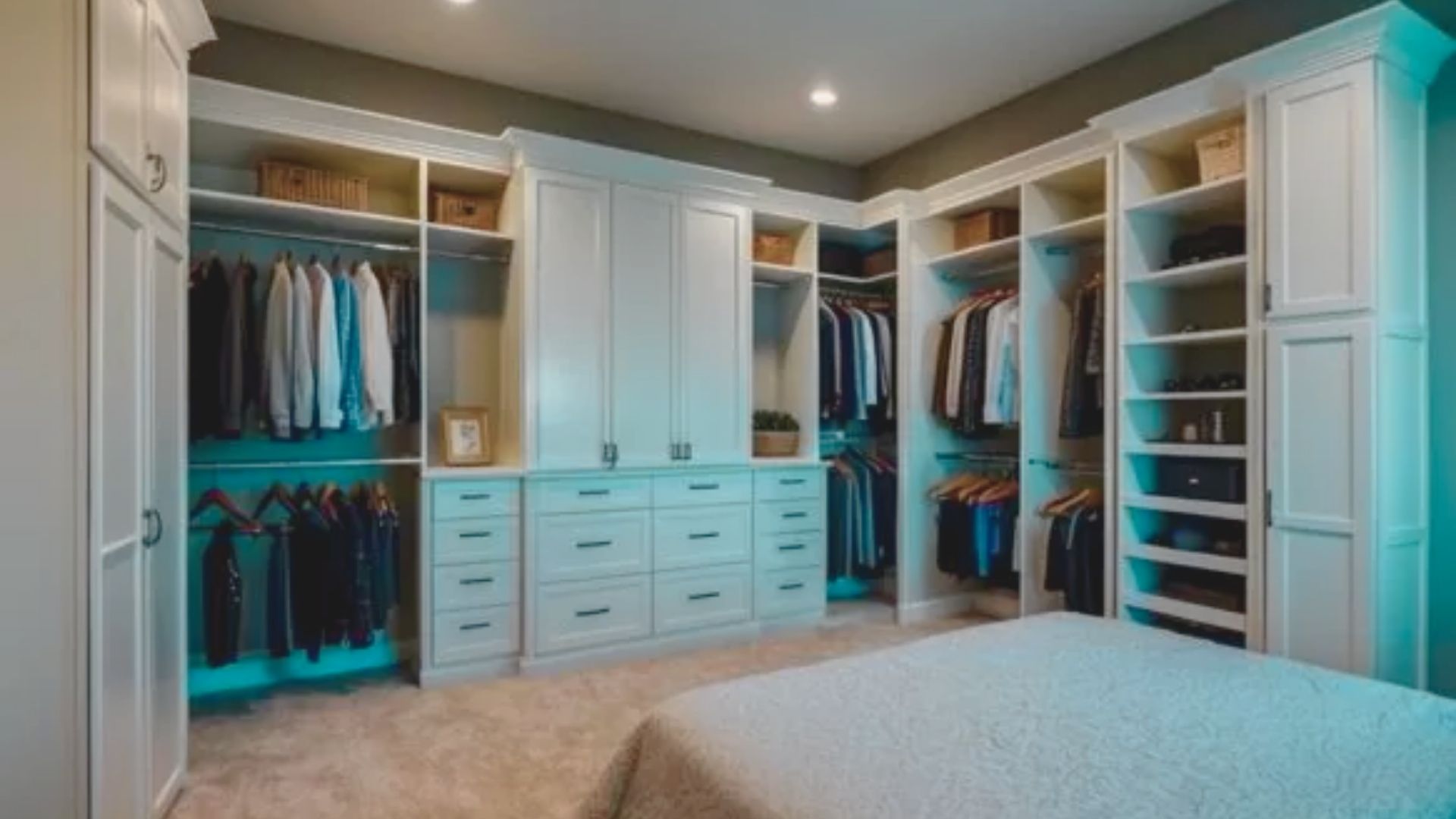
Reduce storage depth where possible. Hanging rods only need 22 inches from the wall. Shelves can be 14 to 16 inches. Every inch you save widens the walkway.
Consider removing storage from one side in narrow sections. A single wall of closets with an open floor across from it feels twice as spacious as double-sided storage.
Add a wider opening or entry. A 32-inch door feels tight. A 36-inch door or open archway changes how you experience the whole space. First impressions matter.
Planning Light Switch Locations Early
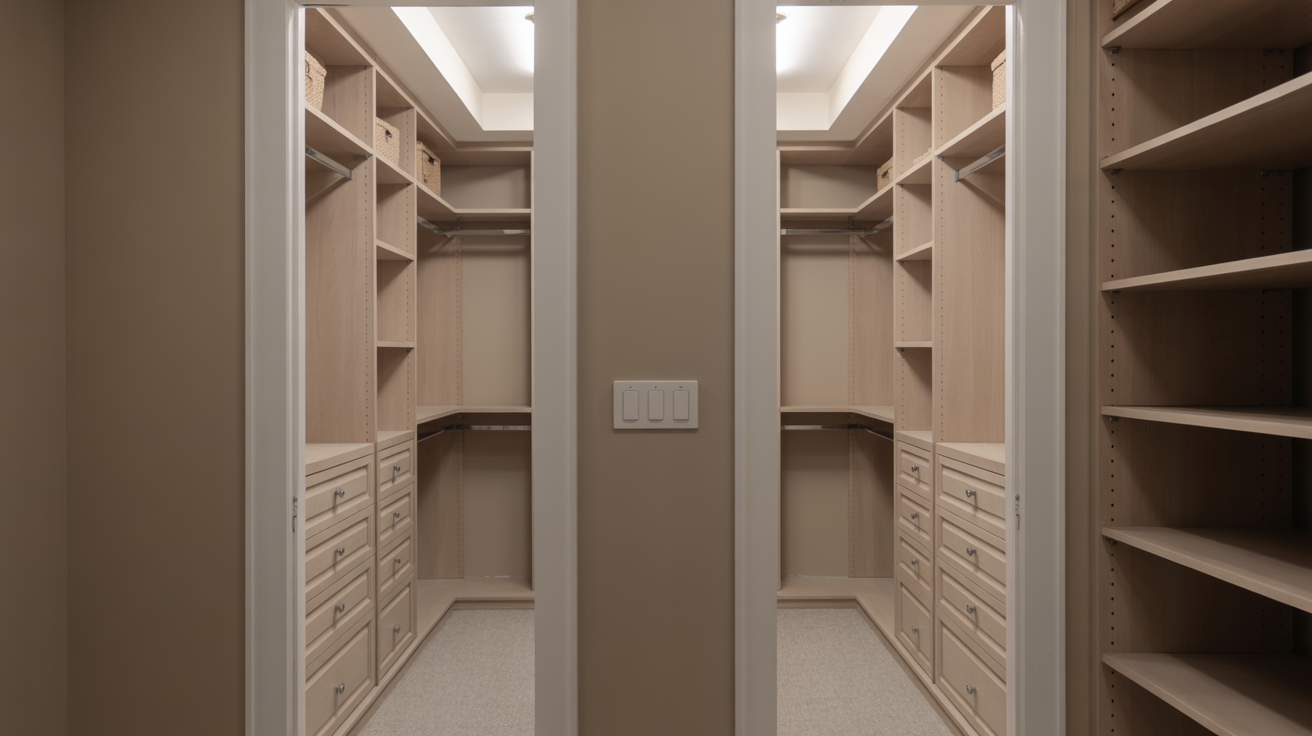
Light switches need wall space. Forgetting this means awkward placements later. You might end up reaching behind hanging clothes or installing switches inside the closet instead of at the entry.
A small wall return, just 6 to 8 inches, solves this problem. It gives you a clean spot for switches right at the door. This tiny detail makes the closet feel finished and intentional.
Plan electrical early in the design phase. Mark switch locations on your floor plan before finalizing storage layouts. This prevents last-minute compromises.
Practical Tips for Designing a Master Bedroom Closet That Works
These proven strategies help you avoid common mistakes and create a closet that functions well every single day.
- Measure hanging depth and clearances accurately: Use 22 to 24 inches for hanging depth and 36 to 42 inches for clearance in front of storage.
- Balance open and closed storage: Open storage works for daily items. Closed storage hides off-season clothes and maintains a clean look.
- Think about daily routines: Plan around how you actually get dressed. Add a bench for shoes or mirrors where you can step back.
- Consider lighting needs: Make sure your closet works in both morning light and artificial lighting for accurate color selection.
- Balance budget with goals: Prioritize quality hardware and good lighting. Install core storage now and add custom touches later.
Conclusion
Your closet should make mornings easier, not harder. I’ve seen how the right layout changes daily routines for the better. When you can find what you need quickly and move around comfortably, everything flows more smoothly.
Start with one idea from this list: maybe adding a door, adjusting circulation, or creating clear zones for two users. Small changes add up fast. You don’t need a complete overhaul to see real improvements in how your space functions.
Your master bedroom closet ideas don’t need to be complicated to work. Focus on what fits your life and build from there. What’s the first thing you’ll change in your space? Share your thoughts below or check out our related posts on closet storage solutions.
Frequently Asked Questions
What is the minimum width for a comfortable walk-in closet?
A walk-in closet needs at least 6 feet of width to feel comfortable. This allows proper storage on both sides with room to move between them.
How much hanging space does one person typically need?
Most people need 4 to 6 feet of hanging rod space for everyday clothes. Add more if you have many dresses or suits.
Should I put my closet lighting on a dimmer switch?
Yes. Dimmers let you adjust brightness for different tasks, from bright light for outfit selection to softer light for organizing.
How deep should closet shelves be for folded clothes?
Standard shelves should be 12 to 16 inches deep. This fits most folded items without wasting space or appearing too shallow.
Can I add a window to an existing closet?
You can if the closet has an exterior wall. Check local building codes first and plan your storage.
