


Southern Colonial Architecture shaped how America built homes for centuries. I’ll walk you through its history, key features, and lasting impact. You’ll learn what makes these homes recognizable and why they matter today.
This guide covers Jamestown’s first shelters, grand plantation estates, Georgian influences, and regional differences. I’ve studied historic buildings across Virginia and the Carolinas firsthand.
You’ll understand how climate, English traditions, and social class created this style. I’ve spent years researching these structures, so you’re getting real knowledge.
By the end, you’ll spot Southern Colonial features anywhere and appreciate their role in American architecture.
Historical Background of Southern Colonial Architecture
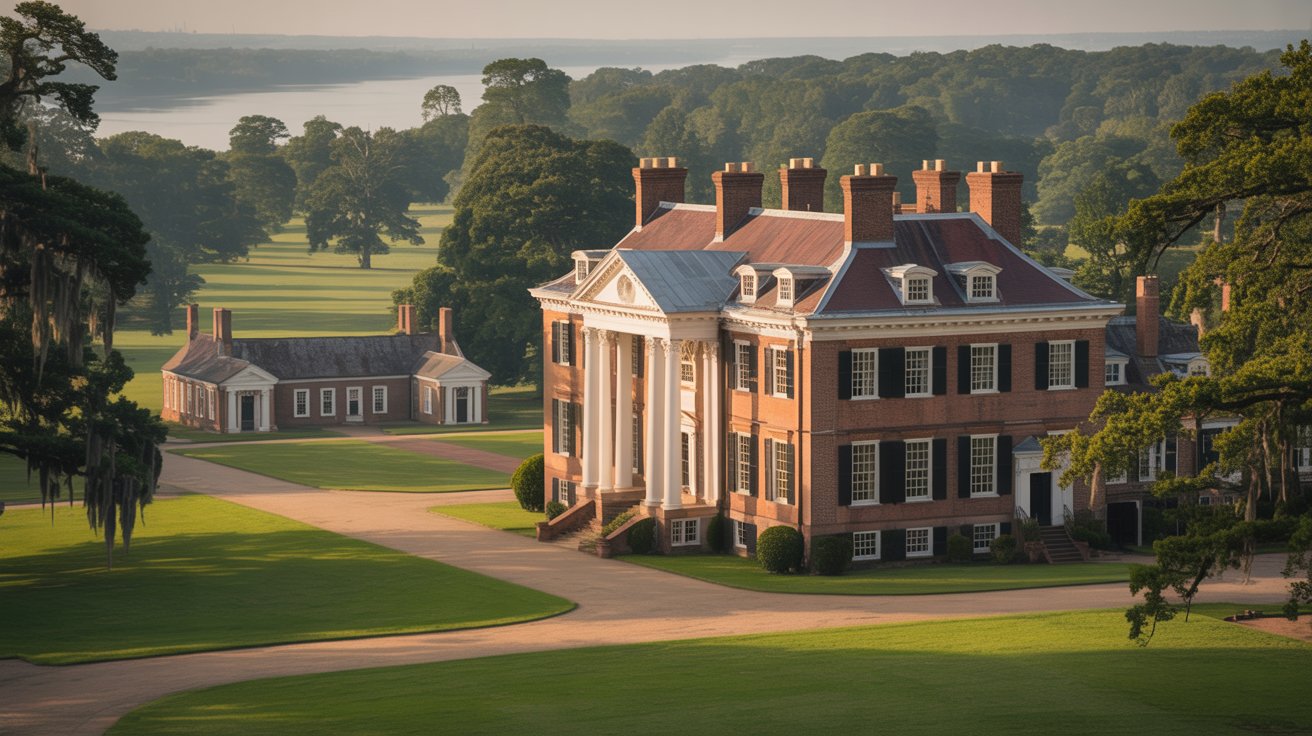
The roots of Southern Colonial style began when English colonists landed in Virginia and the Carolinas during the 1600s. They brought building traditions from home but had to adapt to new climates, materials, and challenges.
The South was different. Hotter summers. More humidity. Different wood types. So they mixed English design with local needs.
Jamestown, founded in 1607, was the starting point. Early colonists built simple structures with local timber, wattle and daub walls, and thatched roofs. These first buildings weren’t fancy. They were about survival.
But during those hard years, colonists learned what worked in Southern heat. They learned about ventilation, raising homes off damp ground, and creating wide overhangs for shade. These practical lessons became the foundation for Southern Colonial style.
Evolution of Southern Colonial Architecture
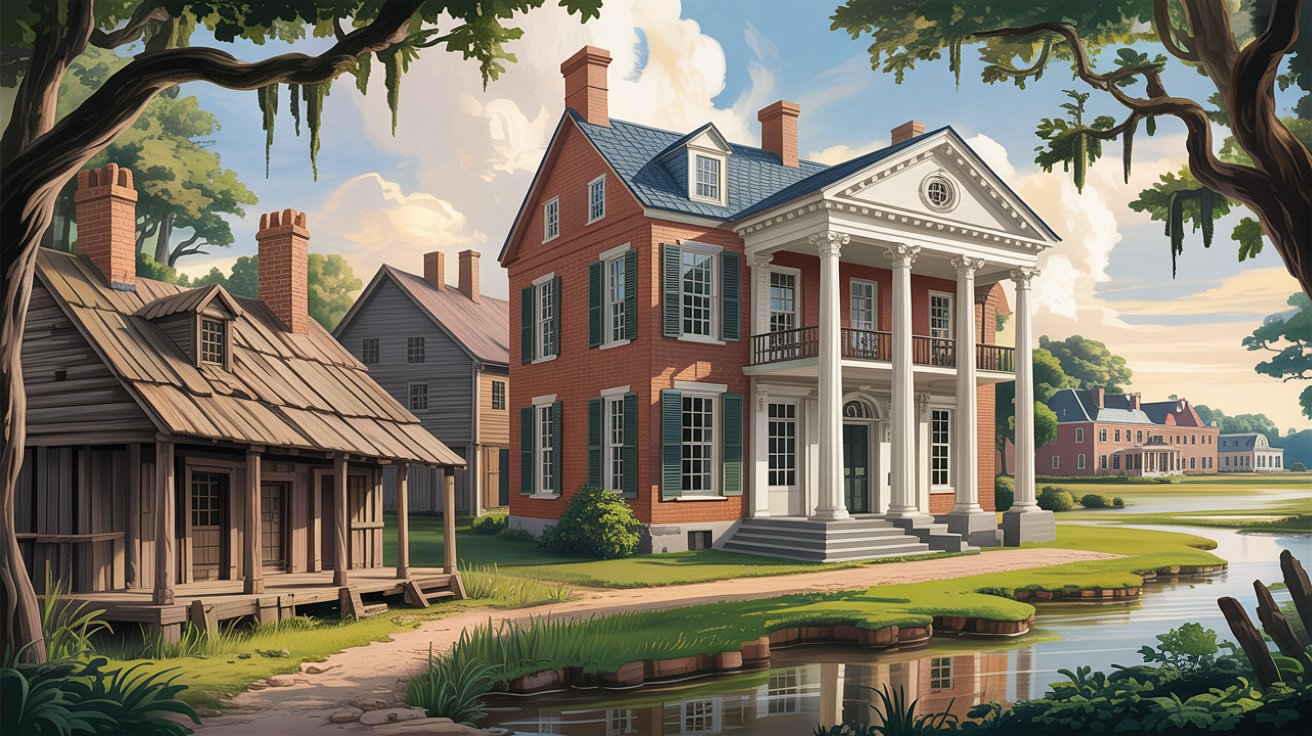
As colonies became stable, building styles changed. Temporary shelters gave way to permanent homes. Wealth grew. Architecture reflected that growth.
Transition from Temporary Shelters to Permanent Homes
By the late 1600s, successful colonists wanted real houses. They were built with brick. They added second stories. They used glass windows.
This shift meant investing in the future. It meant families planned to stay. The buildings showed it. Chimneys were built to last. The foundations were solid. Roofs used tile or wood shingles instead of thatch.
Growth of Plantation Society Along Southern Rivers
Rivers were highways in the colonial South. Plantations spread along waterways like the James River and the Ashley River. Tobacco and rice created wealth.
That wealth built bigger homes. The owners wanted to show their success. Architecture became a status symbol. The grander your home, the more important you seemed.
Influence of Wealth, Land Ownership, and Social Hierarchy
Social class mattered deeply in the colonial South. Your home announced your position. Wealthy planters built mansions. Small farmers built modest cottages.
This created variety in Southern Colonial style. But certain features appeared across classes. Symmetry. Central doors. Chimneys on the ends. These elements united the style even when scale differed.
Key Characteristics of Southern Colonial Architecture
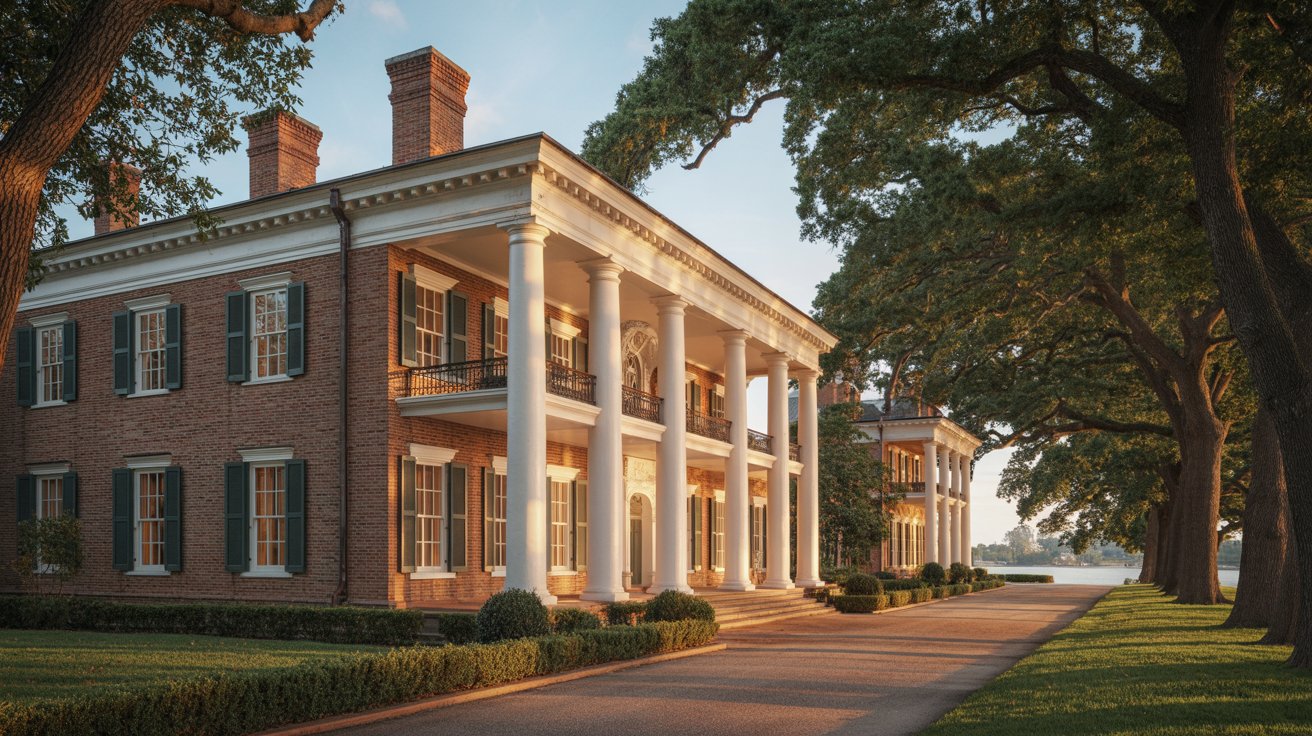
Several features define Southern Colonial homes. Once you know them, you’ll spot this style anywhere. These traits came from practical needs and cultural preferences.
Symmetry and Formal Building Layouts
Symmetry was everything. Count the windows on one side of the door. You’ll find the same number on the other side. This balance showed order and refinement.
Floor plans were formal too. A central hallway ran from front to back. Rooms flanked it on both sides. This layout allowed for cross-ventilation. It also created a sense of formality when guests entered.
Use of Brick, Wood, and Local Materials
Brick became the preferred material for those who could afford it. It didn’t rot. It resisted fire. It looked substantial.
Wood was common too, especially in early buildings or smaller homes. Builders used cypress, pine, and oak. They cut it locally. For foundations, they used brick piers or stone.
Large Verandas, Columns, and Central Entrances
Porches were vital in Southern heat. Wide verandas wrapped around homes. They provided shade. They created an outdoor living space.
Columns supported these porches. Sometimes simple posts. Sometimes formal classical columns. The central entrance was always prominent. Often with a decorative door surround. This made a statement about who lived inside.
Tall Windows and Double-Hung Sashes
Windows were large to catch breezes. Double-hung sashes meant both top and bottom could open. This created airflow.
Shutters protected windows from storms. Inside, high ceilings kept hot air above where people sat. Room heights often reached 10 to 12 feet.
Georgian Influence on Southern Colonial Architecture
The Georgian style from Britain heavily shaped Southern Colonial buildings. This influence peaked between 1700 and 1780. It added formality and classical details.
What Is Colonial Georgian Architecture
Georgian style came from King Georges I through III of England. It emphasized proportion. Classical details. Restrained decoration.
Buildings had a strong sense of order. Mathematical ratios determined room sizes. Moldings, cornices, and pilasters added detail without excess. The style was dignified, not flashy.
Impact of British Georgian Design on Southern Homes
Southern colonists admired British Georgian style. They saw it as cultured and refined. Wealthy planters copied it in their homes.
This meant adding features like pedimented doorways. Modillion cornices under the eaves. Paneled interiors. The grandest homes had formal parlors with elaborate woodwork. They imported furniture and fixtures from England.
The Great Fire of London and the Rise of Brick Construction
The Great Fire of 1666 changed how people thought about building. After London burned, new laws required brick and stone. This lesson reached the colonies.
Brick construction spread in the South. It was safer. It lasted longer. Cities like Williamsburg saw more brick buildings. Even modest homes might have brick ends with wood sides.
Southern Colonial Public Buildings and Town Planning
Colonies didn’t just build homes. They built towns. Public buildings reflected the same architectural principles. Planning showed order and purpose.
Planned Cities Like Williamsburg, Virginia
Williamsburg was laid out on a grid in 1699. It became Virginia’s capital. The streets were straight. Public buildings anchor key points.
The Capitol building and the Governor’s Palace showed off colonial power. They used brick. They had formal gardens. They impressed visitors. This planning created a sense of permanence and authority.
Government Buildings and Civic Architecture
Colonial governments wanted impressive buildings. Courthouses, capitols, and assembly halls were built to last. They used the best materials.
These buildings often had the most formal Georgian details. Cupolas topped the roofs. Fanlights graced the doorways.
The message was clear: the government was serious and permanent.
Churches and Taverns as Social Centers
Churches served religious and social functions. Many were brick with classical details. Tall steeples marked the skyline. Box pews inside showed who held status.
Taverns were equally important. They hosted meetings. They provided lodging. They spread news. Buildings like Raleigh Tavern in Williamsburg became centers of colonial life.
Plantation Homes and Southern Colonial Estates
Plantations represented the peak of Southern Colonial architecture. These estates combined homes, outbuildings, and working landscapes to show wealth and power.
Plantations faced rivers so ships could load tobacco or rice directly. The big house sat prominently overlooking the water. Kitchen, smokehouse, and other buildings stood nearby. Slave quarters were separate. The whole complex operated like a small village.
Carter’s Grove, built in the 1750s, shows Georgian style at its finest with perfect symmetry and rich woodwork. Other mansions like Westover and Drayton Hall followed similar patterns. These homes used the best materials and were meant to impress for generations.
Inside, rooms had specific purposes. Grand central halls welcomed guests. Parlors hosted entertainment. Dining rooms showed off wealth. The woodwork was elaborate. Paint colors were bold, including deep reds, greens, and blues. Furniture followed current English fashions.
Differences Between Southern and New England Colonial Architecture
North and South built differently. Climate, economy, and culture created distinct styles. Both were colonial, but the results differed in important ways.
|
Aspect |
Southern Colonial |
New England Colonial |
|
Climate Needs |
Hot summers required high ceilings, large porches, and spread-out designs for ventilation |
Harsh winters required central chimneys, tightly clustered rooms, and lower ceilings to conserve heat |
|
Chimney Placement |
Chimneys sat on exterior walls |
Chimneys were central for maximum heat distribution |
|
Materials |
Brick and wood adapted for heat and humidity |
Wood and stone built for insulation and warmth |
|
Social Structure |
Strong hierarchy with grand plantation homes for wealthy and simple houses for small farmers |
Community-focused with most homes similar in size |
|
Development Pattern |
Rural and plantation-based with estates dominating the landscape |
Urban and town-based with compact commercial centers like Boston and Salem |
|
Settlement Type |
Wealthy colonists lived on their land; towns like Charleston were smaller |
Towns and cities grew as primary centers of life and commerce |
Legacy of Southern Colonial Architecture
Southern Colonial style didn’t disappear after the colonial period. It influenced later styles and continues to inspire modern builders. Groups like the Colonial Williamsburg Foundation restored entire districts.
The National Trust for Historic Preservation protects important sites. These buildings teach us about the past and connect us to history.
Colonial Revival began in the late 1800s and continues today. New homes often feature colonial elements like symmetrical facades, central entrances, brick construction, and columns. The style feels traditional and grounded.
The style endures because it works. Porches provide outdoor space. Symmetry looks balanced. Traditional materials age well. These buildings represent American history and connect us to the founding era. Understanding them helps us understand ourselves.
Conclusion
Southern Colonial Architecture has always fascinated me. I remember standing on a Charleston porch, feeling that cooling breeze, and suddenly understanding why these features mattered.
You now know the key elements, from symmetrical facades to wide porches that made Southern heat bearable. I hope this guide helps you appreciate these historic homes.
What feature stands out most to you? Leave a comment and share your thoughts. If you found this helpful, share it with friends who love American history and check out our other articles on colonial design.
Frequently Asked Questions
What defines Southern Colonial Architecture?
Southern Colonial Architecture features symmetrical facades, large porches, tall windows, and central entrances. Common materials included brick and wood, adapted from English traditions to suit Southern heat.
How is the Southern Colonial different from the New England Colonial?
Southern Colonial homes have exterior chimneys, high ceilings, and large porches for cooling. New England Colonial homes have central chimneys and lower ceilings for warmth.
When did Southern Colonial Architecture develop?
The style began in the early 1600s with Jamestown and evolved through the 1700s. Georgian influence created more formal designs by the mid-1700s.
What materials were used in Southern Colonial homes?
Brick was preferred for durability and fire resistance. Wood like cypress, pine, and oak was used for framing and smaller buildings.
Why did Southern Colonial homes have large porches?
Large porches provided shade and outdoor living space in hot climates. They allowed cross-ventilation and served as social gathering areas.
